

Stats
- 332 Chapter Posts
- 7 Personal Logs
- 5 News Items
Last Post
Sun Oct 25th, 2026 @ 12:34pm
Darth Serus
Name Darth Serus
Position Dark Lord of the Sith
Character Information
| Written by | Christopher | |
| Title(s) | Dark Lord of the Sith Heritur (Caanan Crown Prince) (re-claimed/contested) Commissar (Bastion political rank) |
|
| Other Names | Thane (Birth Name) | |
| Gender | Male | |
| Species | Human | |
| Age | 27 | |
| Class/Occupation | Sith Lord Jedi Guardian |
|
| Affiliation | Sith Order (Restored) Third Galactic Republic Bastion Moff Empire Reborn Jedi Order (formerly) |
|
| Alignment | -40 | |
| Born | 1,192 ABY, Caanus | |
| Homeworld | Caanus | |
| Weapon(s) of Choice | Single-Bladed Lightsaber (Bloodshine Red - formerly Hurrikaine violet)  |
Physical Appearance
| Height | 5ft 10in | |
| Skin Colour | White (Pale) | |
| Weight | 13st | |
| Hair Color | Brown | |
| Eye Color |
|
|
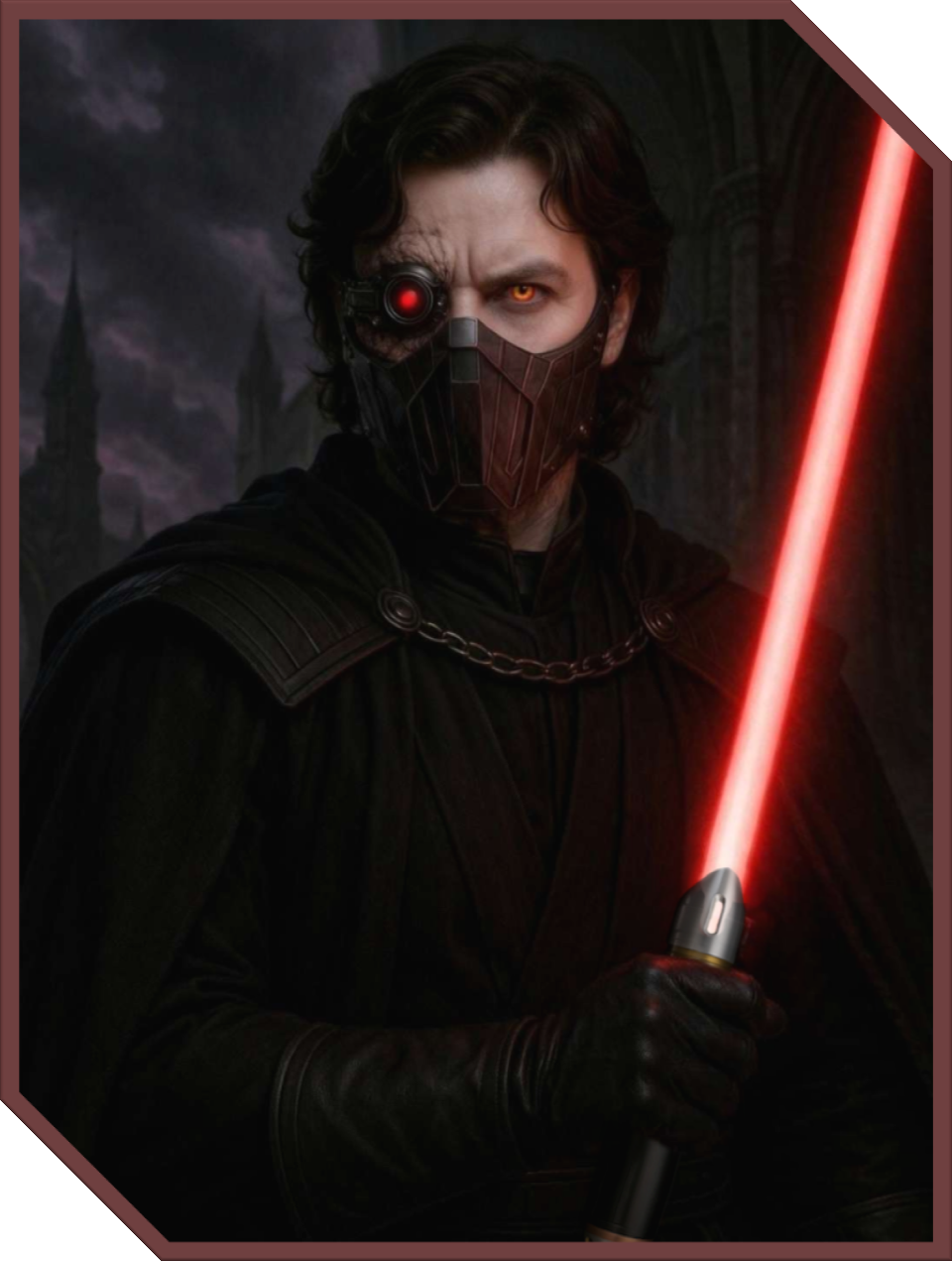
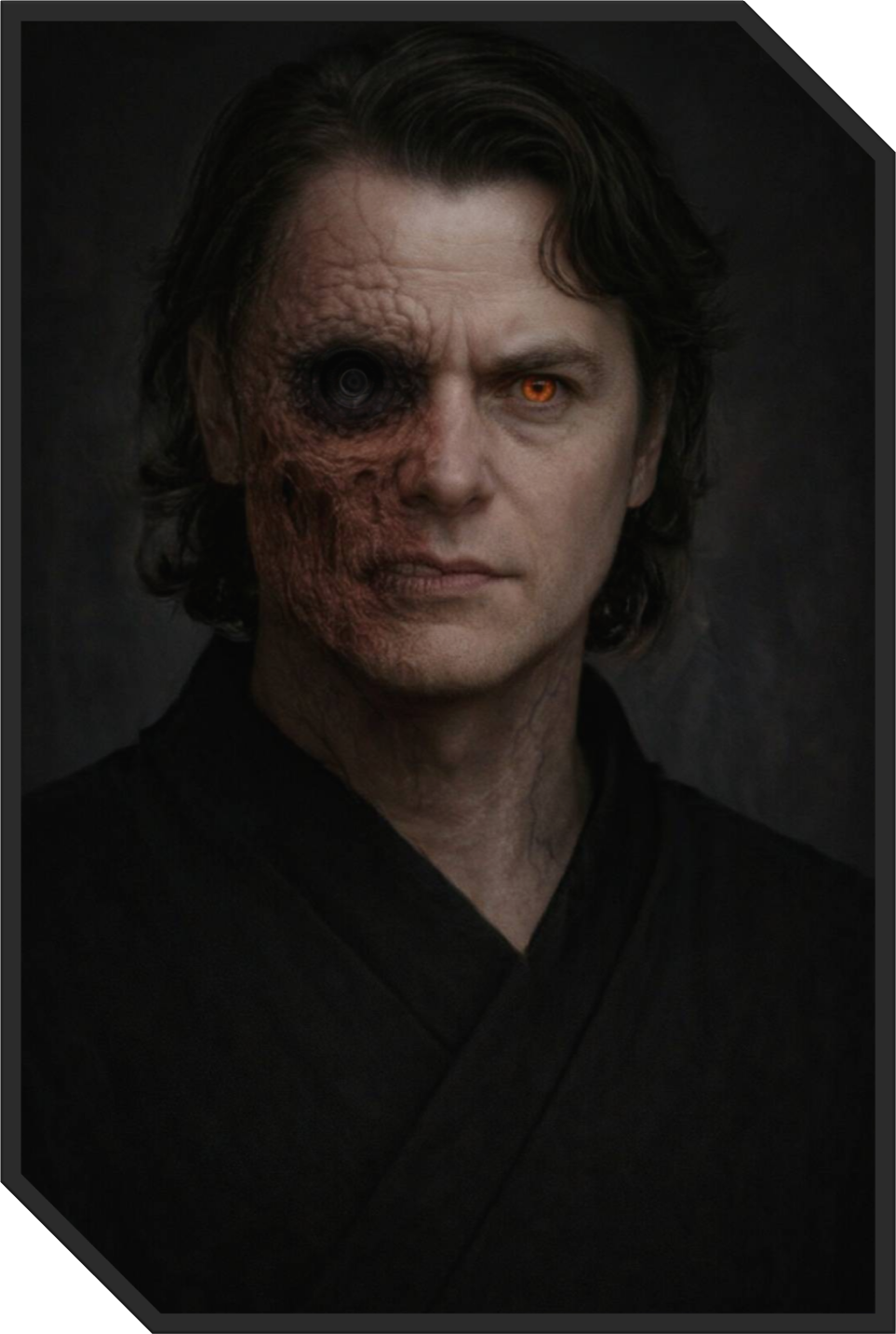
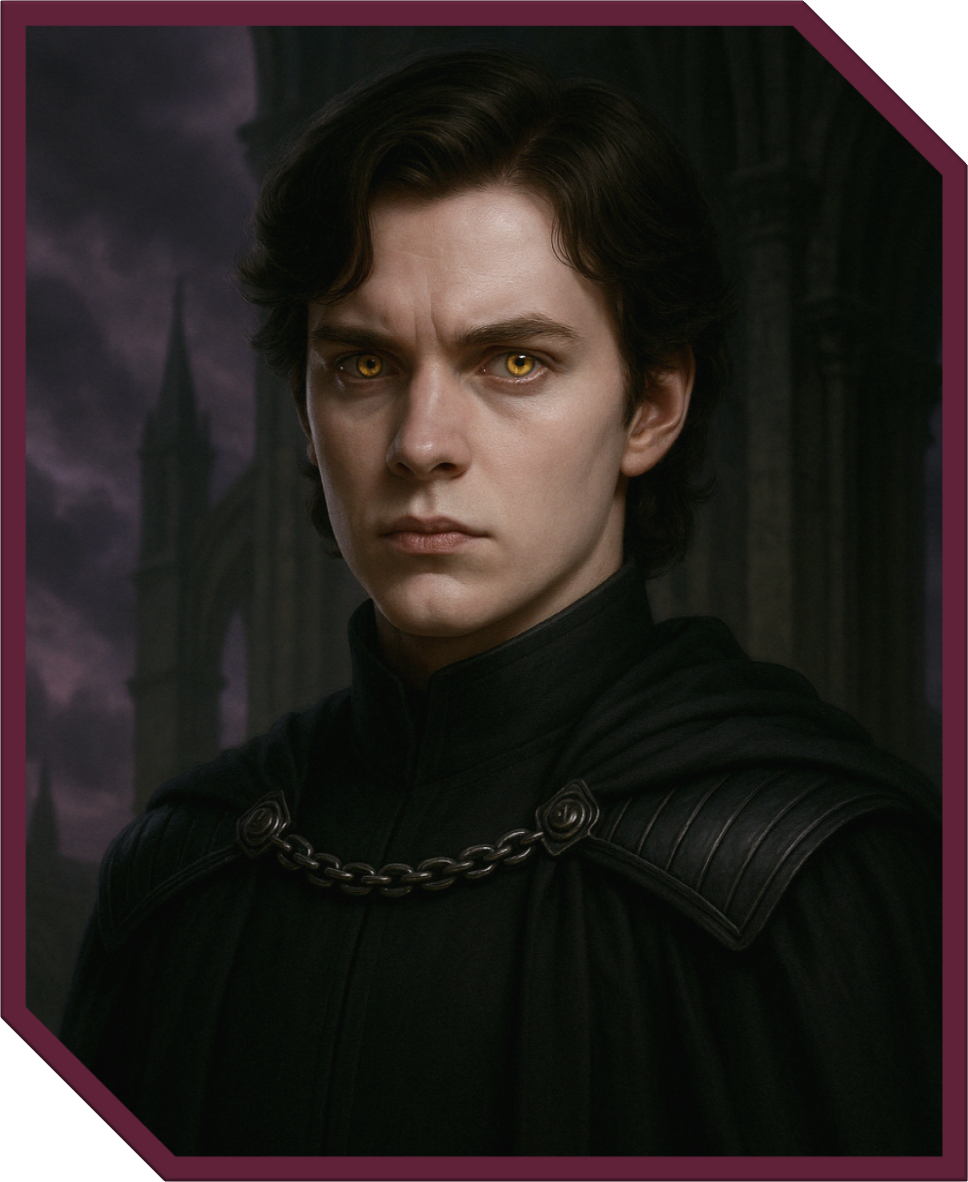
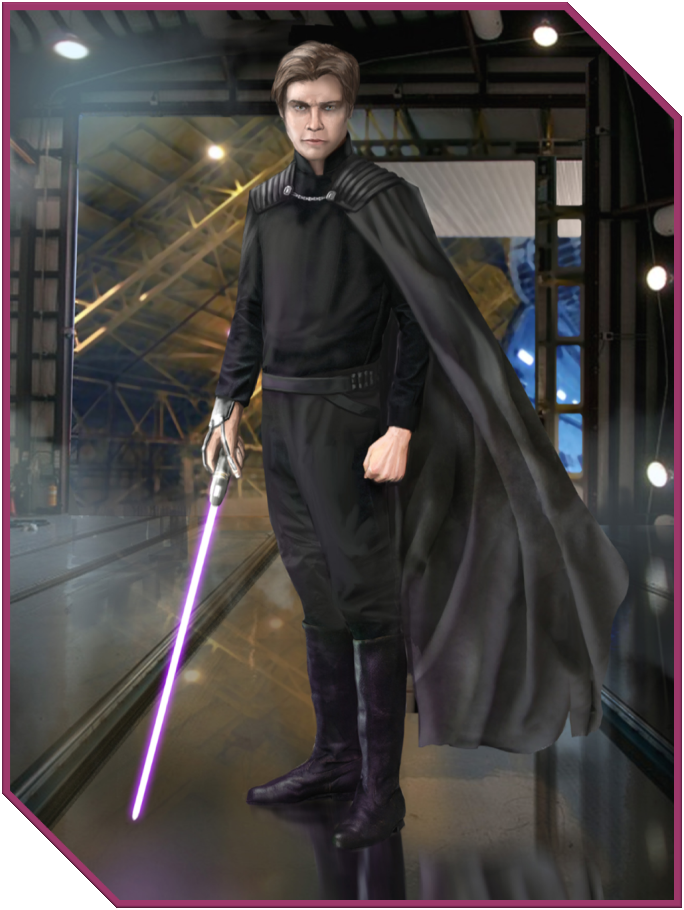
| Physical Description | 1,219 ABY onwards Of average height, Darth Serus possesses a dense, compact musculature, his broad shoulders and otherwise slight frame belying a strength that is not immediately apparent. His movements were once measured and economical, reflective of a duellist’s discipline, but have since taken on a more controlled rigidity, as though each action is now governed as much by necessity as intent. He bears the pale complexion characteristic of his Caanan heritage, though this is now uneven in places, interrupted by extensive scarring. His thick brown hair is typically worn swept back, though often left less deliberately maintained than in earlier years. The right side of his face has been permanently disfigured following the events on Sleheyron. Severe chemical burns have destroyed his right eye and much of the surrounding structure, leaving a collapsed and scarred socket that has since been fitted with an artificial replacement. The surrounding flesh is tight, uneven, and darkened where the damage was most severe, the line of his jaw and cheek visibly altered. These injuries are not cleanly healed, and instead present as a lasting, intrusive presence upon his features. He requires a respirator to functionally breath and speak, his vocal system almost entirely destroyed by his injuries. A scar remains across the same side of his face from earlier injury, now partially subsumed within the wider damage, though still faintly visible beneath it. His right hand was crushed during a drug-induced arena battle with Bomoor Thort on Jericho in 1,217 ABY, resulting in the loss of several digits and requiring cybernetic prostheses to reconstruct the outer half. The mechanical elements remain visible upon close inspection, particularly in the fingers, and contribute further to the sense of him as something no longer wholly unbroken. Taken together, these injuries have altered not only his appearance but his presence. Where once he carried himself with the composed bearing of a trained Jedi Knight, he now presents as something more severe and less forgiving: a figure held in deliberate control, whose physical form reflects the violence he has both endured and chosen to embrace. 1,217 ABY - 1,218 ABY Of an average height, Thane has a certain degree of dense musculature, with his broad shoulders but slight frame belying his true strength. With thick brown hair that is often swept back, Thane has the pale white skin indicative of his Caanan heritage and a scar running across his right eye. His right hand was crushed during a drug-induced arena battle with Bomoor Thort on Jericho, in 1,217 ABY, forcing cybernetic prostheses and reconstruction of its outer half. |
|
| Form of Dress | Darth Serus typically wears a variant of traditional Jedi attire, though this has become increasingly adapted to suit his evolving identity and physical condition. His standard dress consists of dark grey and black tunics paired with a long black greatcoat, or a more form-fitting black jumpsuit designed for ease of movement in combat. These garments are now tailored more closely to his frame than in earlier years, accommodating both his partially-cybernetic right hand and the lasting injuries sustained on Sleheyron. He also possesses a reinforced, military-style battle tunic, often worn beneath a black cloak or cape. This attire offers greater protection without significantly compromising mobility, and is favoured during prolonged engagements or operations where direct confrontation is expected. Following the damage to the right side of his face and body, elements of his clothing have taken on a more functional role. High collars, layered fabrics and partial facial coverings are occasionally incorporated, both to shield damaged tissue from environmental exposure and to reduce visual distraction or vulnerability during combat. These additions are not constant, but appear when circumstance demands. Across all variations, his attire reflects a gradual shift away from the symbolic and toward the practical. Where once his clothing retained elements of Jedi tradition, it now serves primarily as an extension of his combat readiness and physical necessity, with little regard for presentation beyond control and function. Previously as civilian garb, he often sported a fitted red spacer’s jacket. His jacket’s right shoulder had been fitted with a strong cortosis-based guard, not pure enough to disable lightsaber blades, but enough to deflect blows, with a small communications device attached to the jacket, near the mouth. |
|
| Prosthetics/Cybernetics | Cybernetic digits and hand reconstruction (last two fingers on right hand) 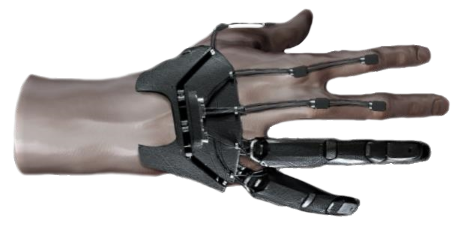 Serus' reliance on cybernetic augmentation increased significantly following the events on Sleheyron, where he sustained catastrophic injuries to his face, respiratory system and upper body. His right hand remains partially prosthetic following its destruction on Jericho, with the outer digits replaced by articulated cybernetic components. These have been maintained rather than replaced, and show signs of continued wear and modification.  The destruction of his right eye necessitated the installation of a removable artificial ocular unit, seated within a reinforced internal socket. This device is functional but comparatively rudimentary, derived from modified shipboard and field equipment aboard the Red Raptor, and requires periodic removal for maintenance and recalibration.  The damage to his lungs and airway proved more severe. Darth Serus now relies on an integrated respirator system connected directly to internal support mechanisms within his throat and chest. This apparatus regulates airflow, filters contaminants and compensates for extensive chemical damage sustained during exposure to industrial compounds. Without it, sustained breathing is difficult and speech is severely limited. Even with assistance, his voice is reduced to a strained, mechanical whisper, shaped as much by the device as by his remaining vocal structure.   Additional internal cybernetics assist in stabilising damage along the spine and nervous system, mitigating the effects of blunt force trauma sustained during the same incident. Smaller interface nodes and subdermal components are present across the upper torso and neck, supporting the integration of these systems and allowing for diagnostic access and adjustment when required. Taken together, these augmentations are not elective enhancements, but sustaining measures. They allow Darth Serus to function, fight and endure where his natural body no longer could, preserving capability at the cost of comfort, autonomy and, in part, identity. |
Important Figures
| Mentor(s) | Dora-Sul† (Kel Dor, informal master) - killed by Axion, Caanus, 1,198 ABY Master Sotah (Selkath, Jedi Master) Darth Bane (Holocron Gatekeeper, Sith Master) Darth Plagueis (Telos Holocron Avatar, Sith Mentor) |
|
| Mentee(s) | Amare (formerly Zaracoda Wolph) (Nautolan, Sith apprentice) Bería "Berry" Z. Fieros (Aquar/Firrerreon, informal apprentice) (briefly) |
|
| Father | Archae Wulhart of House Verus (former Senator) 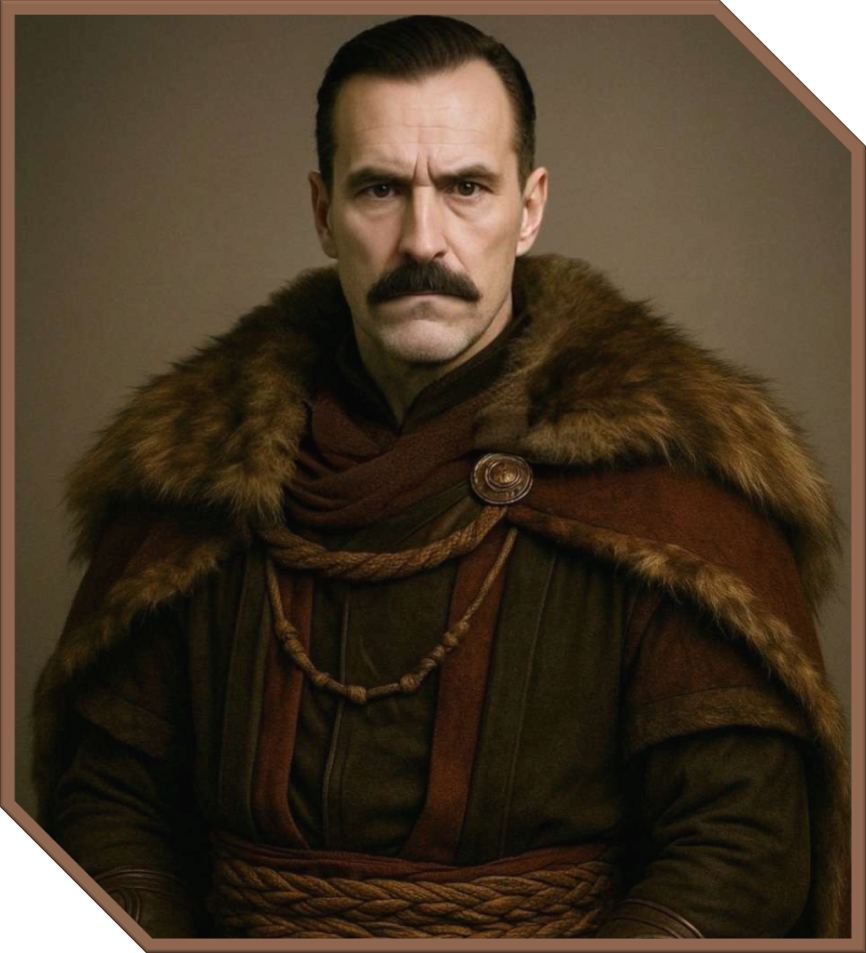 |
|
| Mother | Amica of House Vraal† (originally missing, now confirmed deceased, taken by Axion on Caanus, 1,198 ABY, subsequently sacrificed by Ventul)  |
|
| Brother(s) | Ventul of House Verus† (previously missing, now deceased, taken by Axion on Caanus, 1,198 ABY; forced to commit suicide by Axion on Sleheyron, 1,218 ABY) |
|
| Other | Bomoor Thort (Ithorian former Jedi Knight, closest friend, Force bond) Loren† (Human Jedi Sentinel, fellow Padawan of Sotah, close friend) - killed by Thane on Jericho, 1,217 ABY |
|
| Notable Kills | Gran Cultist - Nar Shaddaa, 1,217 ABY One Sith K'Errekh - Tython, 1,217 ABY Jedi Shadow Loren† - Jericho, 1,217 ABY Spirit of Darth Cabal - Vaa, 1,217 ABY Rift Master Ise-Kai Formeri - Lucazec, 1,218 ABY GWC Superintendent Mosquith - Bastion, 1,218 ABY Lord Caelric Wyrd - New Alderaan, 1,218 ABY |
Other
| Voice | Artificially-stabilised voice: Pre-vocal damage Voice: |
|
| Music and Themes | Thane's Motif Serus' Motif Imperium Motif |
Personality & Traits
| General Overview | 1,219 ABY A proud and often arrogant individual, Darth Serus is guided by a deeply ingrained belief that order must be imposed upon the galaxy, and that justice is not an inherent right, but something to be enacted by those capable of doing so. Once devoted to the ideals of the Jedi and the Republic, his understanding of justice has long since diverged. He now holds that true justice lies in allowing individuals to realise their fullest potential, unrestrained by the limitations or failings of others. This philosophy, rooted in a form of "enlightened self-interest", continues to underpin his actions. His long-standing fascination with ancient teachings and Force traditions from across cultures has shaped a worldview that prioritises growth, power and clarity of purpose above adherence to doctrine. Where he once sought to reconcile these ideas with the structures of the Jedi, he now rejects such institutions outright, viewing them as inherently restrictive and ultimately complicit in the stagnation of the galaxy. Outwardly, Serus remains cynical, sharp-tongued and dismissive of weakness, holding particular contempt for corruption, inefficiency and what he perceives as performative morality. His disdain for the Jedi has deepened into something more personal, no longer merely ideological but rooted in their perceived failure to act decisively when it mattered. In their place, he has come to believe that only those willing to act without hesitation can shape the galaxy into something functional. However, the events on Sleheyron marked a profound and irreversible shift in his character. Where once his beliefs were held with confidence and a degree of intellectual detachment, they are now reinforced by direct experience of helplessness, failure and physical ruin. Serus does not abandon his philosophy in the face of this, but instead hardens it. His pursuit of power is no longer simply aspirational or reasoned - it is necessary. The possibility of powerlessness has been realised, and he refuses to allow it again. This has manifested in a more severe and uncompromising demeanour. His pragmatism has sharpened into something colder, his tolerance for deviation or inefficiency markedly reduced. Decisions are made with greater finality and less regard for secondary consequences. Where he once weighed outcomes, he now prioritises certainty. Interpersonally, Serus remains guarded and selective in his associations. Trust is rarely given and more rarely maintained. Those few individuals he does value are still afforded a degree of loyalty, but even this has become conditional, shaped increasingly by utility, alignment and necessity rather than sentiment alone. His capacity for attachment has not vanished, but it is now more tightly controlled and more readily subordinated to his broader aims. Beneath this, there exists a quieter and more dangerous change. Serus' dentity as a Sith is no longer something he is consciously constructing or refining - it has become the only framework through which he can interpret both his survival and his future. He does not view this as corruption or loss, but as confirmation. Recent developments have therefore not altered his trajectory, but intensified it. Serus now operates with a level of ruthlessness and focus that reflects not only his ideology, but the consequences of having once fallen short of it. 1,217 ABY - 1,218 ABY A proud and often arrogant man, Thane is nevertheless guided by a desire to see order prevail in the galaxy, as well as a drive to see a justice of sorts meted out upon the world around him. Once devoted to the tenets of the Jedi and Republic, looking to defend the weak from those who would exploit them, his beliefs on justice have shifted, deciding true justice is permitting each individual to attain their greatest potential, and not to be hampered by the failings of the weak or inept. With this great individualist identity in mind, coupled with his fascination for ancient scripture from all facets of the Force, leaves him always searching for the best way to improve himself, so that he may do more for the galaxy - and himself - as a whole, as a form of "enlightened self-interest", a mantra strongly rejected by his former peers. Outwardly cynical and sarcastic, Thane has a heavy disdain for corruption and incompetence within both the government and other echelons of society, with a great disdain for the pretentiousness of the Jedi – he would rather use their abilities to refine the system, forging a galaxy where sentients can aspire to great heights, a side effect of which would see the fortunes of the world improve accordingly - or so Thane believes. Philosophies aside, Thane keeps few friends, partly due to his headstrong views and actions, but largely through his distrust of most others, finding respect something hard to give, given how most people behave. However, the few friends he does keep, he whole-heartedly respects and appreciates, and would go to extreme measures to ensure their safety and survival. Recent developments, however, have led to Thane adopting a more ruthless approach to his goals and relationships. Becoming increasingly pragmatic and waning in his sympathies, more of the former Jedi's personality subscribes to elitism and resorting to whatever methods necessary to achieve his ends.  |
|
| Strengths & Weaknesses | 1,219 ABY Serus possesses a highly defined and increasingly rigid moral framework, through which he interprets both individual actions and broader galactic events. He believes firmly in the existence of objective right and wrong, but considers himself uniquely capable of discerning that boundary where others cannot. In his view, inaction in the face of wrongdoing is itself a form of complicity, and he holds particular contempt for those who defer responsibility under the guise of uncertainty, doctrine or procedure. This clarity of purpose serves as one of his greatest strengths. Serus is decisive, often able to act where others hesitate, and is capable of pursuing long-term objectives with sustained focus and intellectual consistency. His willingness to draw upon a wide range of teachings - Jedi, Sith and otherwise - allows him to adapt his approach fluidly, rather than remaining bound to a single ideology. However, this same certainty forms the core of his most significant weaknesses. Serus' belief in his own moral and intellectual authority leaves little room for contradiction or external perspective. Whilst he is capable of recognising intelligence and competence in others, he rarely accepts that they may possess insight equal or superior to his own. This creates a tendency toward isolation in both thought and action, limiting his ability to fully rely on others even when it would be advantageous to do so. His relationship with authority remains fundamentally adversarial. Although he acknowledges the necessity of structure and hierarchy in principle, he rejects it in practice unless it aligns directly with his own judgement. This results in a paradoxical dynamic in which he seeks to impose order upon the galaxy whilst resisting it in any form not of his own making. Following the events on Sleheyron, a further weakness has emerged, less visible but more consequential. Where Thane once struggled with lapses in concentration and emotional control, Darth Serus now exerts a far tighter external discipline. His focus in combat and decision-making has, in many respects, improved. However, this control is not the product of balance, but of suppression. The anger, pain and humiliation that drive him are no longer obstacles he seeks to overcome, but forces he deliberately harnesses. This grants him bursts of exceptional power and intensity, but at a cost. In moments of escalation, particularly when faced with personal stakes or perceived defiance, Serus has been prone to overcommitment. He will pursue an advantage beyond the point of reason, prioritising domination over efficiency or sustainability. This can lead to unnecessary risk, environmental destruction and tactical blind spots, particularly against opponents capable of exploiting his momentum. In essence, Serus' greatest strength - his certainty, his will, and his refusal to yield - is inseparable from his greatest flaw. He does not easily recognise when a situation requires restraint rather than force, nor when victory lies in adaptation rather than imposition. He is therefore at his most dangerous when he is correct, and at his most vulnerable when he believes he cannot be otherwise. 1,217 ABY - 1,218 ABY With an increasingly polarised moral compass, Thane has a very strict sense of what is right and wrong, but feels that others are not always aware of which is which themselves and that his morality rises above that of the typical, unthinking man. He does not outwardly believe that knowledge, for example, is strictly evil, but how it is applied, and often feels that doing nothing is as bad as doing something “evil”. Also, despite his belief in there being an absolute authority, he often chafes against most authority figures, not actually believing them to know what’s best. A primary weakness, however, is his lack of self-control concerning concentration and his views on others, which goes completely against much of his training, and is something that frustrates him further – particularly given his goals and beliefs in life, often holding him back from what he truly wishes to achieve. |
|
| Ambitions | 1,219 ABY Darth Serus seeks to impose order upon a galaxy he views as fundamentally compromised by weakness, indecision and systemic corruption. Where he once believed justice could be upheld through defence and guidance, he now sees it as something that must be actively enforced, shaped and, where necessary, imposed without consent. In his view, the failure of both the Republic and the Jedi lies not in ignorance, but in their unwillingness to act decisively when faced with clear imbalance. Central to this ambition is his belief that potential must not be constrained by the limitations of the many. He rejects the notion that stability should be maintained at the expense of excellence, instead favouring a structure in which those capable of shaping the galaxy are permitted to do so without obstruction. To Thane, this is not cruelty, but efficiency; not tyranny, but clarity. This outward vision is inseparable from a far more personal drive. Serus is defined by an unrelenting need to refine and elevate himself. His pursuit of knowledge, power and mastery of the Force is not merely aspirational, but essential to his identity. He does not believe he has the right to judge, to lead, or to reshape the galaxy unless he possesses the strength to enforce those judgements in absolute terms. Weakness, in himself as in others, is something to be identified and eradicated. Following his tutelage under Darth Bane’s holocron, this ambition crystallised into a broader ideological goal: the restoration of Sith supremacy, not as a repetition of past empires, but as a deliberate evolution. Darth Serus does not seek to emulate prior Sith Lords, but to surpass them, synthesising their teachings into a more coherent and purposeful doctrine under his own direction. However, the events on Sleheyron have altered the nature of this ambition in a critical way. Where his pursuit of power was once driven by philosophy and long-term vision, it is now equally fuelled by personal necessity. His defeat at the hands of Axion did not diminish his goals; it refined them. Power is no longer simply a means to reshape the galaxy, but a requirement for survival against forces that have already proven themselves capable of breaking him. His vendetta against Axion therefore persists, but no longer as a singular objective. It exists now as both a personal reckoning and a benchmark. To surpass Axion is not merely to achieve revenge, but to validate his entire belief system; to prove that his path, his synthesis of strength, will and doctrine, is not only viable, but inevitable. In this, Serus' ambitions have become both broader and narrower at once. He still seeks to reshape the galaxy, but the path toward that end is now defined by a singular, uncompromising principle: He must never again be placed in a position where another being can decide whether he lives or dies. 1,217 ABY - 1,218 ABY To restore order and justice to the galaxy; to root out corruption and incompetence and try those who would let it go on, mentally judging them as weak and/or absurd; for those with the greatest potential to be unhindered by those who prove the greatest liability. A perfectionist, Thane also has a deep-set desire to increase his own power and knowledge of the Force and his abilities with the blade, for he could not possibly judge others and do he feels must be done if he does not have the ability to do so. As such, he intends to focus more on his self-control. Since undertaking tutelage from Darth Bane's holocron and pursuing the Cult of Axion, his ambitions have multiplied; he wishes to restore a new age of Sith supremacy under his enlightened direction, and to seek revenge and success against Axion and his minions. |
|
| Interests and Hobbies | 1,219 ABY Much of Darth Serus' time is devoted to the refinement of his combat ability, though this has changed significantly following the events on Sleheyron. Where once he engaged freely in extended sparring and physically demanding training, his current condition necessitates a more controlled and deliberate approach. Practice is now focused on efficiency, economy of motion and the precise application of power, often conducted in short, intense intervals rather than prolonged sessions. Despite these limitations, he remains deeply committed to mastery of the blade and the Force alike. His study of advanced and esoteric techniques, including the principles underpinning Vaapad, continues in a largely self-directed manner, driven by a belief that no single doctrine is sufficient in isolation. Outside of combat, Serus maintains a sustained and rigorous engagement with intellectual pursuits. He frequently studies history, philosophy, political structures and the recorded teachings of both Jedi and Sith traditions, seeking patterns, contradictions and opportunities for synthesis. This has developed into a focused interest in archaeology, particularly in the recovery and interpretation of artefacts connected to Force traditions, which he views not as relics, but as tools and lessons preserved through time. Since his injuries, a number of these pursuits have taken on a more ritualistic quality. Periods of stillness are often spent in controlled environments aboard the Red Raptor, where he engages with holocrons, recovered texts and artefacts in isolation. These sessions are as much about maintaining mental clarity and control as they are about acquiring knowledge. The act of study itself serves as a stabilising mechanism, allowing him to impose structure upon both his thoughts and the physical limitations of his body. He has also developed a practical interest in the maintenance and integration of his own cybernetic systems. Whilst not an engineer by trade, Serus takes an active role in understanding the function and limitations of the components that sustain him, working alongside the crew to ensure their reliability. This is not borne from curiosity, but necessity; his continued existence is now partially dependent on systems he refuses to treat as unfamiliar. In effect, Darth Serus no longer maintains hobbies in the conventional sense. His interests are extensions of his purpose: mastery, understanding and control. Even in stillness, all of his time is directed toward becoming something more capable than he was before. |
|
| Languages | Can speak: Basic, Huttese, Sith (choice words and phrases) Can Understand: Droidspeak, Twi'leki, Selkatha, Rodese Can Write: Aurebesh, High Galactic |
Skills/Abilities
| Fighting Style | Serus' combat methodology is rooted in a hybridised foundation of Form VI “Niman” and Form II “Makashi”, supplemented by a developing and unstable engagement with Form VII principles. Prior to the events on Sleheyron, this combination allowed him to operate as a highly adaptable combatant, capable of transitioning fluidly between duelling, multiple-opponent engagements and integrated Force-based techniques. Niman formed the basis of his early approach, valued for its versatility and balance. Through extensive practice, Serus developed a proficiency that allowed him to apply the form across a wide range of combat scenarios, compensating for its perceived lack of specialisation through experience and adaptability. This made him particularly effective in unpredictable environments and against varied opposition. Alongside this, Serus cultivated a strong aptitude for Makashi. As his combat philosophy shifted toward precision and individual dominance, this form became increasingly central to his style. His weapon, an ornate electrum hilt designed for one-handed use, complements this approach, allowing for refined control, measured strikes and efficient redirection of an opponent’s blade. In controlled duelling conditions, Serus demonstrates considerable skill, favouring economy of motion and targeting of critical openings. However, this structure has been fundamentally altered following his defeat on Sleheyron. The physical trauma he sustained has imposed new constraints upon his movement, endurance and breathing. As a result, his fighting style has evolved toward greater efficiency and immediacy. Extended engagements and prolonged defensive exchanges are now avoided where possible. Instead, Serus favours decisive, high-impact sequences designed to end confrontations quickly before his physical limitations become a liability. His use of Makashi remains prominent, but it is no longer purely measured. The form is now interwoven with heavier, more forceful motions drawn from Niman and augmented by direct application of the Force. This results in a style that retains the precision of a duellist, but carries significantly more weight and aggression behind each action. Central to this evolution is his partial adoption of Form VII concepts, particularly those associated with Vaapad as taught by Zenarrah Sozo. Serus does not practise this form in its pure or controlled state. Instead, he utilises a fractured interpretation, drawing directly upon his own anger, pain and instability to amplify his output in combat. This manifests as sudden escalations in tempo and power, with sequences of attacks that prioritise overwhelming force over technical perfection. This approach grants him moments of extreme lethality, during which he is capable of driving even highly skilled opponents onto the defensive. However, it is inherently unstable. The same emotional intensity that fuels these assaults also degrades his precision, increases physical strain and exposes him to counterattack if the initial momentum is broken. In addition to lightsaber combat, Darth Serus increasingly incorporates dark side abilities into his fighting style. Force lightning, telekinetic manipulation and environmental exploitation are used not as supplementary techniques, but as integral components of his offensive capability. This further reinforces his preference for decisive engagements, allowing him to apply pressure across multiple vectors simultaneously. In summary, Serus' fighting style has transitioned from balanced adaptability to focused aggression. He remains a highly skilled and dangerous combatant, particularly in direct confrontation, but his approach now reflects a critical shift in philosophy: He no longer seeks to outfight his opponents over time, but to overpower them before time itself becomes his enemy. |
|
| Notable Abilities | Darth Serus is a highly skilled lightsaber duellist, with particular competence in Form II “Makashi”. His precision, timing and control in one-on-one engagements make him especially dangerous against other blade users, where he is able to exploit small openings with efficient and targeted strikes. His Force capabilities are broad and well-integrated into his combat methodology. He demonstrates strong aptitude in kinetic applications of the Force, including augmentation of speed and strength, advanced telekinetic manipulation and environmental control. These abilities are not used in isolation, but woven directly into his fighting style to create constant pressure across multiple vectors. Serus also possesses developed telepathic abilities. He is capable of performing Mind Tricks, projecting controlled illusions and exerting influence over weaker or unguarded minds. In more direct applications, he has demonstrated the ability to invade the thoughts of others, applying pressure or extracting information where resistance is insufficient. His transition into the dark side has significantly expanded the scale and intensity of his abilities. Serus is now proficient in the use of Force lightning, both as an offensive weapon and as a defensive measure. He is capable of catching, redirecting and countering incoming energy with considerable precision, though such actions place significant strain upon his body. His natural strength in telekinesis has further manifested in the effective use of Force choke and other forms of direct physical domination, allowing him to incapacitate or control opponents without reliance on his weapon. Through training alongside Bomoor, he has also developed a degree of mental discipline, enabling him to shield his own thoughts from intrusion and resist external influence more effectively than before. However, this control is not absolute, particularly under conditions of heightened emotional or physical stress. A defining aspect of Serus' current abilities is his connection to a Force bond originally formed with Bería and later transferred to Bomoor. Through this link, the two are capable of sharing awareness, emotional states and, under specific conditions, elements of their respective abilities. Whilst Serus has learned to restrict what he consciously transmits, the connection remains imperfect, with stray thoughts and impulses occasionally passing between them without intent. Following the events on Sleheyron, his use of the Force has taken on a more volatile character. The severe physical trauma he sustained has not diminished his connection, but altered how he draws upon it. His power is now frequently channelled through pain, anger and sustained exertion, resulting in bursts of heightened output that exceed his prior baseline. These surges can be devastating in combat, but are difficult to maintain and place increasing strain upon both his body and his concentration. In particular, his interaction with Force lightning has become more aggressive and less restrained. Rather than purely directing or deflecting energy, Serus has shown the ability to forcibly manipulate its path, using incoming power against its source. This technique, whilst effective, is inherently dangerous and risks destabilising both the energy itself and his own control.  (Above: Thane's original Jedi lightsaber.) Darth Serus built his current, second lightsaber shortly after his completion of the Jedi Trials as Thane, utilising a rare Hurrikaine crystal within. This was originally a brilliant violet hue, but he he bled the crystal shortly after his defeat by Axion on Sleheyron. His original blue-bladed weapon remained in storage in his quarters at the Coruscant Jedi Temple for a few years, until he tried to bequeath it to Bería, a brief informal apprentice. When she ultimately rejected his mentorship, the weapon was returned to Thane, who kept it until the arrival of Zaracoda Wolph, who would become his formalised Sith apprentice, Amare. She replaced the blue jewel with her own amber crystal, wielding the blade for a few months until it was destroyed by the Dark Jedi cultist, Nala Sao, on Korriban in 1,218 ABY. The blue crystal was eventually given to Mentis to construct his own new weapon. |
|
| Melee | Very Good | |
| Marksmanship | Average | |
| Lightsaber | Excellent | |
| Force Sensitivity | Excellent | |
| Force Ability | Very Good | |
| Engineering | Poor | |
| Computers | Very Poor | |
| Piloting | Very Good | |
| Medical | Very Poor | |
| Charisma | Good | |
| Stealth | Average | |
| Specific Skills/Abilities | • Force Telekinesis (Choke/Lightsaber Throw): Very Good • Force Speed: Good • Force Telepathy (Mind Trick): Average • Force Lightning:Very Good (strengthened by alignment) • Force Concealment: Average • (Force) Dark Rage: Poor (strengthened by alignment) • Force Absorption/tutaminis: Average • Force Healing/Revitalise: Very Poor (weakened by alignment) • Form I (Shii-Cho): Good • Form II (Makashi): Excellent • Form III (Soresu): Average • Form IV (Ataru): Poor • Form V (Shien/Djem So): Poor (Shien), Very Good (Djem So) • Form VI (Niman): Excellent • Form VII (Juyo/Vaapad): Average (Juyo), Good (Vaapad) • Jar'kai: Very Good |
| History | Youth and the Reborn Jedi Order (1,192 ABY - 1,217 ABY) Early Life on Caanus Born on the world of Caanus, a planet on the edges of the Outer Rim Territories, near to the locations of the Sith Empires of old, Thane was born into House Verus, a noble family of monarchical descent from generations past, and the present ruling family. 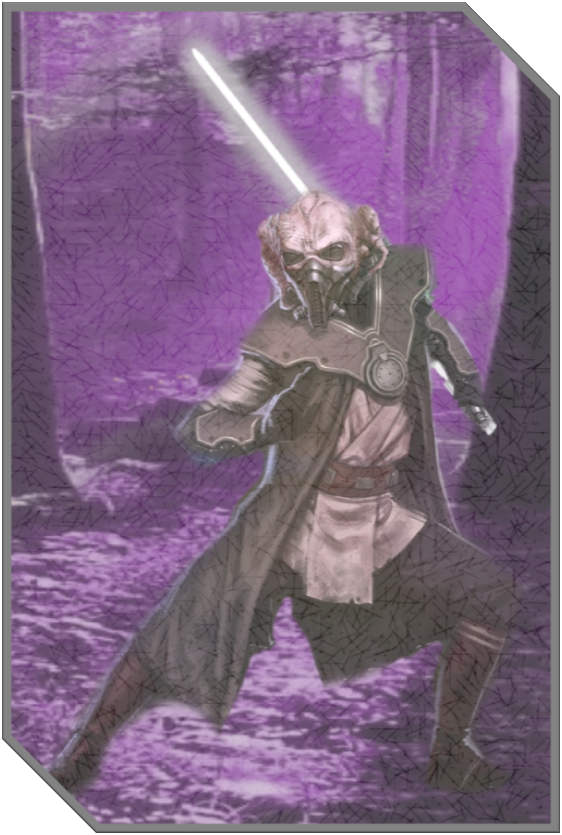 Born in 1,192 ABY, Thane spent his first few years with his family and the family’s ‘protector’, Dora-Sul, a Kel Dor and one of the many Jedi Knights who had chosen to exile themselves to pursue their own beliefs following his allegiance to the Rift Jedi during the Second Outer Rim Conflict. Wielding a rare white-bladed lightsaber, he found Senator Wulhart a noble and respectable political figure and had been friends with him for years before pledging himself into servitude to him, and soon found Thane to be Force Sensitive, and was given permission by Wulhart to train him in the ways of the Force. Born in 1,192 ABY, Thane spent his first few years with his family and the family’s ‘protector’, Dora-Sul, a Kel Dor and one of the many Jedi Knights who had chosen to exile themselves to pursue their own beliefs following his allegiance to the Rift Jedi during the Second Outer Rim Conflict. Wielding a rare white-bladed lightsaber, he found Senator Wulhart a noble and respectable political figure and had been friends with him for years before pledging himself into servitude to him, and soon found Thane to be Force Sensitive, and was given permission by Wulhart to train him in the ways of the Force.Shortly after, Thane’s younger brother, Ventul, was born and was also found to be a Force Sensitive, but obviously too young to train. Although a boy, Thane enjoyed his training with Dora-Sul and eagerly took to learning the ways of the Jedi (or at least the Kel Dor’s ways), but it was not long after that that a band of unknown criminals came to Vaarthul (the Verus family keep) and paved a path of destruction, stealing the Verus Bloodfist (a sizeable crystal, which was built into a sceptre, and was – unbeknownst to Thane – one of the extremely rare and powerful Kaiburr crystals, able to augment a Force user’s ability exponentially), as well as claiming both Ventul and Amica – Thane’s mother – for themselves. Wulhart was left a broken man, and Dora-Sul died defending the young Thane. Unable to look after his son, Wulhart withdrew himself from public life, and locked himself within his keep, whilst Thane – at the behest of an old friend of Dora-Sul’s – was taken to be trained by the Jedi Order. Knight of the Third Republic Although hesitant at training Thane, given what had transpired already in his young life, the Jedi Coucil provided a wise and experienced Jedi Master, a Selkath named Sotah, who had trained one padawan – Loren - previously, who had passed her Trials with flying colours. At first, Loren had been a troubled student, often brash and aggressive, quick to anger and judge, but had turned into a model Jedi Knight and Shadow. With this track record, Master Sotah was the obvious choice for Thane. Despite never fully getting over the tragedy he had experienced as a young boy, Thane nevertheless remembered much of what Dora-Sul had taught him, which sometimes contradicted with the Jedi’s versions of education, and hastily took on board Sotah’s teachings. The Selkath proved a patient and friendly master, understanding of Thane’s troubles and past, and the two became close friends, with Thane looking to Sotah as a form of father figure. However, as time progressed, Thane could not help but find himself more at odds with the Jedi Code and Council, as well as their teachings generally. Whilst he always acknowledged the wisdom of his own master and friend, generally being respectful in the criticisms he directed towards Sotah, he still struggled with others and the way they approached things, as well as a certain disdain developing the stagnant Republic itself. 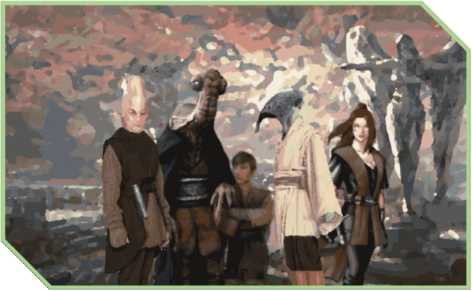 With much of his faith lost in the Republic and the Order, Thane frequently came into conflict with Jedi Masters and other students who were vehemently supporting the status quo and system, but he did find a friend and ally in the form of fellow Padawan Bomoor Thort, who was apprenticed to one of Master Sotah’s closest friends, Master Thurius. As such, the four were frequently alongside one another in their missions, growing used to one another’s skills and abilities, with each Padawan even learning a certain amount from each other’s Masters. With much of his faith lost in the Republic and the Order, Thane frequently came into conflict with Jedi Masters and other students who were vehemently supporting the status quo and system, but he did find a friend and ally in the form of fellow Padawan Bomoor Thort, who was apprenticed to one of Master Sotah’s closest friends, Master Thurius. As such, the four were frequently alongside one another in their missions, growing used to one another’s skills and abilities, with each Padawan even learning a certain amount from each other’s Masters.During his training, Thane mastered the Shii-Cho form like all others do, easily slipping into its primitive and fairly effective way, whilst it was soon discovered more of his Force potential lay in his combat skills. As a Jedi Guardian, he began to out-spar Master Sotah and his use of Soresu, and was advised to focus on the more offensive forms. Given his enjoyment of the form and his belief he would need to see its use in the future (a conclusion drawn following a mission to the war-ravaged world of Onderon alongside Bomoor), Thane devoted himself to the tenets of Makashi, enhancing his duelling capability and allowing him to succeed in quite enclosed spaces, but also began dabbling in Niman, which he was criticised for by others. With his potential to be a greater duellist, other Jedi suggested he specialise in other more focused forms, but Thane felt that the openness of Niman allowed him to truly expand his abilities for all situations, rather than leaving himself open to weakness in an unknown environ. Whilst he remained superior in Makashi, his ability in Niman became respectable, but could still be outmatched by someone who mastered another form, i.e. Shien. 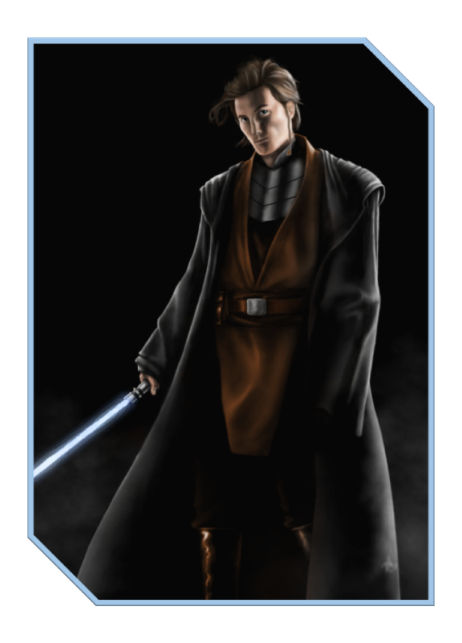 Whilst Thane’s disillusionment was shared by Bomoor, it was perhaps not to such a severe degree, or he did not quite agree with Thane’s attitudes towards solving the problem, and so the pair have mostly agreed to disagree. When the Trials came, Thane faced a lot of opposition from the Jedi Council and other Masters, but with Sotah’s encouragement and his desire to become more than he was (an ambition he tried to downplay), Thane managed to pass them and be elevated to Jedi Knight status a short time after Bomoor. Whilst Thane’s disillusionment was shared by Bomoor, it was perhaps not to such a severe degree, or he did not quite agree with Thane’s attitudes towards solving the problem, and so the pair have mostly agreed to disagree. When the Trials came, Thane faced a lot of opposition from the Jedi Council and other Masters, but with Sotah’s encouragement and his desire to become more than he was (an ambition he tried to downplay), Thane managed to pass them and be elevated to Jedi Knight status a short time after Bomoor.Due to the Order’s numbers being significantly reduced in recent generations by exile, abandonment and defection, many more free-spirited Jedi were encouraged to have a looser lead than others, and were assigned objectives that were further-reaching, as was so with Thane and Bomoor. Still close with Master Sotah, he would often join them during their adventures, but it was during this time that Thane grew even more apathetic towards certain aspects of government and the Jedi, as some missions put them in tricky moral situations that could be easily resolved, in Thane’s opinion, but in which they were superseded by the Council, or he was punished for his actions following, with Bomoor often being the one addressed, more than Thane. It is this, particularly recently, that has led Thane to think more on the teachings he received as a young boy from the exile Dora-Sul, which involved open-mindedness and independent thought. With these tenets handy, Thane began several self-taught lessons to realise his abilities and potential, as well as to better serve his goals and the galaxy as a whole. Whilst he recognised that people are mere individuals, he also recogniseddthat mere individuals can have significant impacts on the galaxy, and that these usually came in the form of Sith or powerful Jedi, leading him to begin extensive studies into history and philosophy, which in itself lent itself to an amateurish fascination with archaeology. Whenever the opportunity arose, Thane would try to make use of the Jedi Archives, but found much of the information limited or classified, and was overtly discouraged from freelance exploration to some systems he deemed noteworthy to examine, both Jedi and Sith, as well as from other cultures. As he was denied more and more, Thane began to feel as though the Jedi were trying to hamper him, as gone were the days of the openness of Luke Skywalker’s New Jedi Order – today was the product of the “Grand Proclamation” and the “New Golden Age of the Republic”. Upon hearing that, Thane snorted, and became one of the millions who said the phrase in jest. However, he still saw value in his objectives and enjoyed his time with Bomoor, often taking their ventures into the unknown as opportunities to explore new avenues to expand and explore his power and understanding, which led him to begin training himself in the seventh lightsaber form, in which he could use others’ feeling and efforts to augment his own. This is a key tenet in Form VII, which in turn then became a focus of Thane's to perfect, but his own poor concentration and control of volatile instincts has made mastery a long way off.  During the height of their Jedi careers, Thane and Bomoor were dispatched to Ord Yutani to tackle the blockade of the world by the Nea Glarist heresy, a resurgent group of Pius Dea devotees led by the pontiff naming himself Contispex. During this event, they uncovered that the Glarists had taken control of an ancient World Devastator of the Old Empire, refurbished into a 'Cathedral of the Firmament' to unleash a new humanocentric crusade on the Third Galactic Republic. During the height of their Jedi careers, Thane and Bomoor were dispatched to Ord Yutani to tackle the blockade of the world by the Nea Glarist heresy, a resurgent group of Pius Dea devotees led by the pontiff naming himself Contispex. During this event, they uncovered that the Glarists had taken control of an ancient World Devastator of the Old Empire, refurbished into a 'Cathedral of the Firmament' to unleash a new humanocentric crusade on the Third Galactic Republic.  It transpired that the leader of the religion was being directly influenced by a fallen Jedi Master referred to as the Proselyte, who was using the Force to manipulate and control a number of key figures into support the heresy. It transpired that the leader of the religion was being directly influenced by a fallen Jedi Master referred to as the Proselyte, who was using the Force to manipulate and control a number of key figures into support the heresy.Through their skills and guile, Thane and Bomoor triumphed, but the experience was one of their first true exposures to doctrines of control and the application of the dark side of the Force. The Sith and the Hunt for Axion (1,217 ABY - 1,219 ABY) Nar Shaddaa: An Unlikely Alliance In 1,217 ABY, Thane and Bomoor were dispatched to apprehend the former Jedi slayer and Mandalorian bounty hunter, Sev Rezer. Rezer had been sighted on Nar Shaddaa, but the mission was far from standard as soon after touching down on the Smuggler's Moon, the pair stumbled upon a Force sensitive young girl with a great potential as a Force user, a part-Aquar named Berry. This, however, was just the start of the coincidences, as they uncovered a Dark Jedi Master's involvement in a turf war between two rival Hutts to claim the Force-empowering Kaiburr crystal shard Grogga had in his vault. 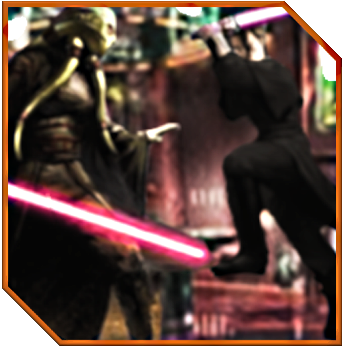 In a peculiar turn of events (and reinforced by a dark vision of the future where Sev fought alongside Thane against a greater evil), Thane, Berry and Bomoor found themselves allying with Sev Rezer, who approached them with information concerning the Dark Jedi, supposedly named the Cult of Axion, named for their Master, whom had apparently slighted the Mandalorian. In an alliance of convenience, the four hatched a scheme to follow Axion's attack upon the estate and stop him from claiming the Kaiburr shard, but during their own infiltration, Thane happened upon a Sith holocron. This holocron was revealed to have been created by none other than Darth Bane, but he had little chance to engage it before finding himself in a duel with Axion, enraged by both the darkness of the holocron... and the revelation that Axion was the one who had attacked his home during his childhood and stole the Bloodfist/Kaiburr shard. In a peculiar turn of events (and reinforced by a dark vision of the future where Sev fought alongside Thane against a greater evil), Thane, Berry and Bomoor found themselves allying with Sev Rezer, who approached them with information concerning the Dark Jedi, supposedly named the Cult of Axion, named for their Master, whom had apparently slighted the Mandalorian. In an alliance of convenience, the four hatched a scheme to follow Axion's attack upon the estate and stop him from claiming the Kaiburr shard, but during their own infiltration, Thane happened upon a Sith holocron. This holocron was revealed to have been created by none other than Darth Bane, but he had little chance to engage it before finding himself in a duel with Axion, enraged by both the darkness of the holocron... and the revelation that Axion was the one who had attacked his home during his childhood and stole the Bloodfist/Kaiburr shard.Axion was clearly the superior combatant, but the four (also assisted by a mysterious Devaronian, Kip Hoddai), managed to stave off absolute defeat, even though were unable to stop the shard from being taken. Luckily, they managed to escape aboard the Red Raptor, a capable smuggling freighter owned by Grogga, to reach Coruscant, and decide on how to proceed. Coruscant: Momentous Decisions During the journey to the capital of the Third Republic, Thane opted alongside Bomoor to informally educate Berry in the Jedi arts, albeit with their own ideals, rather than those of the Reborn Jedi Order, the Council of which he and Bomoor soon faced. Explaining the circumstances on Nar Shaddaa, Grand Master Quellus was not overly supportive of Thane's decisions, but agreed in the necessity to deal with Axion and his cult. 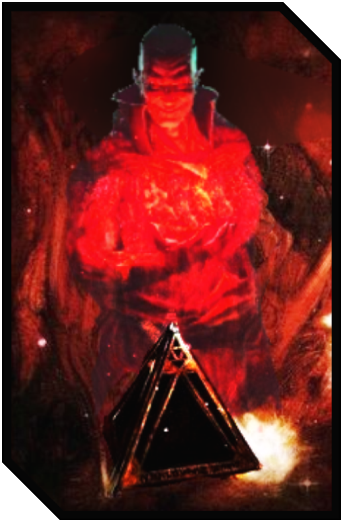 However, with the reprimands delivered to him, a great deal of deliberation and the arrival of another to their motley group - the fugitive Morgo Le'Shaad (whom Thane saved from arrest by CoruSec), Thane made the decision to resign from the Jedi Order, but was given a tentative blessing to work against Axion and his pursuit of the Kaiburr shards with Bomoor's continued involvement and oversight. Free from an organisation he no longer agreed with or cared for, he departed with the others on the Red Raptor, and began further embracing the teachings of Darth Bane, already developing some basic dark side powers. However, with the reprimands delivered to him, a great deal of deliberation and the arrival of another to their motley group - the fugitive Morgo Le'Shaad (whom Thane saved from arrest by CoruSec), Thane made the decision to resign from the Jedi Order, but was given a tentative blessing to work against Axion and his pursuit of the Kaiburr shards with Bomoor's continued involvement and oversight. Free from an organisation he no longer agreed with or cared for, he departed with the others on the Red Raptor, and began further embracing the teachings of Darth Bane, already developing some basic dark side powers.Tython: Mind of Madness Knowing Tython to be considered the birthplace of the early Jedi Order, the crew of the Red Raptor set course for their next destination, armed only with steely determination and Sev Rezer's navigational skills. Finding ancient ruins held within a great Force storm of immense destructive power, the crew entered, and soon discovered the temple had been refuge to another group only too recently. Quickly assaulted by visions of their greatest fears, the lone member of this first group, a crazed Whiphid tormenter deeply immersed in the dark side and madness, Thane found himself unable to call upon the Force as a spectre of Axion marched towards him. Although he and the others overcame their trials, slaying the lunatic, the Raptor crew discovered what it was that had driven the Whiphid to madness and murder: the holocron of once-Galactic Emperor, Darth Krayt. With the death of this creature, it seemed Thane and the others had eliminated whatever fractured descendants of the One Sith still existed - and also retrieved yet another Sith holocron. Opening it, they were greeted by the gatekeeper; a retrospective, self-aggrandising being, much like Darth Bane's keeper, but who unlike Bane, had taken stock of his creator's failures and had adopted a new, adapted persona. Although Thane was certain to listen to the teachings and thoughts of Krayt, it was the tutelage of Bane he engaged with more, and whom he found greater wisdom. Jericho: The Lost Jedi Three months passed on from Tython, with the crew finding no luck in hunting down either Axion or more shards. In that time, however, Thane continued paying heed to the words of Bane's holocron whilst trying in vain with Bomoor to impart Force teachings to the rebellious Berry. The mysterious Kip Hoddai left for parts unknown and Thane's relationship with Morgo became increasingly strained. Within that time, Thane became increasingly comfortable with the lessons he drew on from the millennium-dead Dark Lord, and he found his sight turning outwards - but certainly not before the scourge of Axion's Cult was purged. Morgo provided Thane with intelligence that the maniacal Mandalorian Exile leader - Zrad Rezer, cousin of crewmate Sev - had come into possession of a Kaiburr shard. As such, the pair launched a daring raid on the ancient Imperial penal asteroid fortress of Jericho. Little did they know that yslamiri had been placed strategically about the facility, negating their connection to the Force. Caught unawares and without their power, the duo were bested and imprisoned, cruelly tortured and beaten for days. During that time, Thane was forced to face his mortality and his greatest, Force-less fear. He and Bomoor were drugged and forced into a barbaric pit fight against one another, both blinded by the chemicals coursing through them. In this fight, inflicting great injuries on one another, Bomoor crushed Thane's right hand - an injury that resulted in losing the last two fingers and shattering most of the other small bones. Planning to create a bloodbath so that he could declare himself the True Mandalorian, Zrad lured both the Cult of Axion and the Hutt Cartel forces of Grogga to Jericho with promises of the Jedi and shard. At the same time, with Berry having discerned with Morgo that the Force had been stripped from Thane, the pair hatched a plan with Sev and an old ally of Berry's, pirate Nimo Lemere, to get into Jericho and save the pair, and seize the shard. Sev allowed himself to go undercover, promising to join his reviled cousin's traitorous war against Manda'toma, and sneaked Morgo and others aboard the station, as the cultists and Cartel arrived, too. Morgo helped free the two beleaguered, ill and heavily beaten Jedi. It was then that Loren, Thane's master's first padawan and closest friend second to Bomoor, presented herself. Sent by the Council to observe the two, she assisted in their escape.  It quickly became apparent that Loren had learned of Thane's tutelage under the holocron, and she saw first hand his dark actions as the Force returned to them. During a firefight with Exiles, Loren took the chance to slip away from the group, apparently determined to leave without confronting Thane to inform the Council. Pursuing her, and after they both failed to convince the other, Thane did what he felt was the only thing he could, and cut Loren down - his Sith sacrifice. It quickly became apparent that Loren had learned of Thane's tutelage under the holocron, and she saw first hand his dark actions as the Force returned to them. During a firefight with Exiles, Loren took the chance to slip away from the group, apparently determined to leave without confronting Thane to inform the Council. Pursuing her, and after they both failed to convince the other, Thane did what he felt was the only thing he could, and cut Loren down - his Sith sacrifice.Nar Shaddaa to Vaa: The Apprenticeship of Zaracoda Following the traumatic events of Jericho, Bomoor confessed to Thane that he had been working under the orders of the Jedi Council to report back on the group’s progress. Chiefly, they were interested in information on Thane and his behaviour – something Bomoor himself was uncomfortable with. Forgiven by Thane, Bomoor resigned from the Order as well, although this decision would result in the pair being declared fugitives from the Jedi. Whilst this was not sanctioned by the Republic itself, they were now being pursued through the galaxy by their former comrades, even whilst they continued to seek out Axion and the kaiburr shards. With the sacrifice of Loren made to preserve both his secret and cement his destiny within the Sith, Thane finally and formally pledged himself to Darth Bane’s teachings. Although the former Jedi rejected the title of Darth, he did choose a new name to serve as his Sith identity – to serve as his truth: Lord Serus. After upgrading the Red Raptor with a dedicated vault and strategy room, Thane took the vessel to Nar Shaddaa again to alter its codes for added security. When returning to the vessel, he discovered an unexpected stowaway in the form of Zaracoda “Coda” Wolph, a particularly talented Force sensitive Nautolan who had just escaped from slavery on the Smuggler’s Moon. Despite a tumultuous start to their relationship, Thane (as bid by Bane’s holocron), sought to make Coda his apprentice, to be the Sith student that Berry could never have been. Coda was quick to learn and to drink in the power of the dark side, freeing herself from her former life as a slave, even if the shackles of her past identity restricted her at times, but she committed herself to both Thane’s teachings and to their quest against Axion. Following the discovery of an ancient Force-imbued key on the planet Sheva, Thane experienced a vision which led the Raptor crew to Vaa, the dead and petrified second moon of his homeworld Caanus. 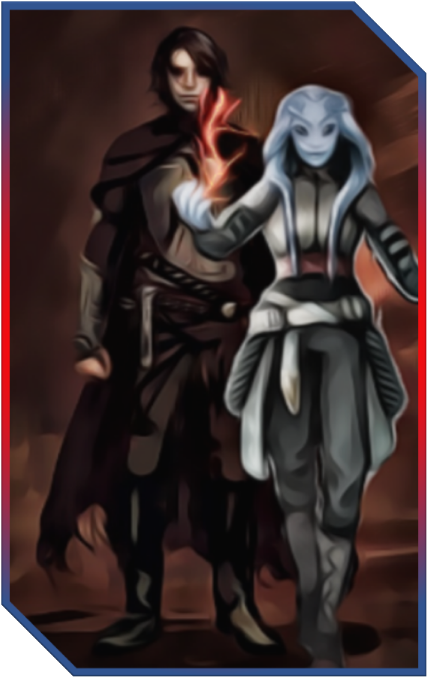 On Vaa, they faced the threat of the grotesquely-mutated Thaalda, the exiled and semi-sentient natives of Caanus itself. Generations before, they had been twisted and enslaved by the Sith Lord Darth Cabal, the once-despot of Caanus. Whilst Thane, Coda and Bomoor were ultimately successful in vanquishing Cabal’s lingering spirit, the ancient Sith Lord having discovered some means of prolonging his connection to the living world, Thane survived through the efforts and remarkable powers of Coda, who then admitted to her master the part she played in her own parents’ demise – a confession Thane accepted without judgement. On Vaa, they faced the threat of the grotesquely-mutated Thaalda, the exiled and semi-sentient natives of Caanus itself. Generations before, they had been twisted and enslaved by the Sith Lord Darth Cabal, the once-despot of Caanus. Whilst Thane, Coda and Bomoor were ultimately successful in vanquishing Cabal’s lingering spirit, the ancient Sith Lord having discovered some means of prolonging his connection to the living world, Thane survived through the efforts and remarkable powers of Coda, who then admitted to her master the part she played in her own parents’ demise – a confession Thane accepted without judgement.As part of her training, Thane provided his original lightsaber, sans some key components (including the crystal), to Zaracoda, and sent her to the world of Lorrd with little to no supplies. Her objective was reconstruct the weapon and to use her own crystal, a gold-hued gem that had been a family heirloom of sorts, and to then meet him and Bomoor on Yavin IV some weeks later. When she arrived, with a new ship and two lightsabers, it was clear that the darkness had taken the young woman. Whilst he had reservations as to the shift within her character, Lord Serus knew he had chosen his apprentice well. Korriban: Discoveries in Darkness (1,218 ABY)  Following consultation with the holocron of Darth Krayt, Bomoor gleaned information regarding a potential location for another Kaiburr shard: the One Sith's millennium-old temple on ancient birthplace of the Dark Lords of the Sith, Korriban. Armed with this information and the strategic use of ysalamiri to slip past the Jedi orbital station, the trio landed within the Valley of the Dark Lords and began their trek, not realising their movements had not gone entirely unnoticed. Following consultation with the holocron of Darth Krayt, Bomoor gleaned information regarding a potential location for another Kaiburr shard: the One Sith's millennium-old temple on ancient birthplace of the Dark Lords of the Sith, Korriban. Armed with this information and the strategic use of ysalamiri to slip past the Jedi orbital station, the trio landed within the Valley of the Dark Lords and began their trek, not realising their movements had not gone entirely unnoticed.Following consultation with the holocron of Darth Krayt, Bomoor gleaned information regarding a potential location for another Kaiburr shard: the One Sith's millennium-old temple on ancient birthplace of the Dark Lords of the Sith, Korriban. Armed with this information and the strategic use of ysalamiri to slip past the Jedi orbital station, the trio landed within the Valley of the Dark Lords and began their trek, not realising their movements had not gone entirely unnoticed. After an arduous trek across the ruined canyon, dark whispers of secrets long-forgotten hissing across the dead stone, the group realised that their arrival had awakened an ancient subspecies of the fabled terentatek, a vicious hunter of Force users. Small and deadly, the beast pursued the group into the cavern system that led towards the ancient temple of one of the original Dark Lords of the Sith, and the headquarters of the fallen One Sith: the Temple of XoXaan. There was a deadly battle against the beast, causing Thane and Bomoor to be separated from Coda and G2-O7. Fending off the monster, Thane and Bomoor were left to divine a means to enter XoXaan’s Temple. Eventually, through the use of Sith magicks learned through his tutelage under Bane’s holocron and the revelation of his Sith name and ambitions to his old friend, Thane managed to gain entry for the pair into the Temple. Inside, they were met by the spectres of Darth Nihl and XoXaan, who led them through the storied chambers until they came upon an artefact later discerned to be a Mind Prison, constructed by the Rakata; the ancient ‘Builders’ believed to have originated hyperspace travel, early galactic rulers. Drawn into the Mind Prison, they discovered it housed the Pureblood Sith King Hazzarah Talmuz, who had taken part in the prehistoric Rakatan invasion of Korriban, repelling them from his planet. Joined shortly thereafter by Coda, who had endured her own trials prior to entry into the Mind Prison and was now referring to herself as Amare, Sith Apprentice, the group was offered a deal by the Sith King: if they could overcome a series of tests within a recreation of the Battle of Trayset (from his war with the Builders), they could return to their bodies. Otherwise, he would claim their physical forms for himself.  Within this simulated reality, they were each presented with a ‘Trial’ unique to them, which they each had to succeed to escape. For Thane, this was the Trial of Strife. Positioned as a leading general within the Pureblood Sith army, he was responsible for facing down an army of overwhelming proportions that outnumbered his several times over, formed of the reanimated techno-revenant husks of fallen comrades. For an entire day, Thane fought and held his ground, until such time the origin of these Fabricants was revealed and loomed large over the city, threatening to twist its entire populace into more undead machines: the Infernal Engine. Within this simulated reality, they were each presented with a ‘Trial’ unique to them, which they each had to succeed to escape. For Thane, this was the Trial of Strife. Positioned as a leading general within the Pureblood Sith army, he was responsible for facing down an army of overwhelming proportions that outnumbered his several times over, formed of the reanimated techno-revenant husks of fallen comrades. For an entire day, Thane fought and held his ground, until such time the origin of these Fabricants was revealed and loomed large over the city, threatening to twist its entire populace into more undead machines: the Infernal Engine.Thane invaded the Engine and faced down its master, the creator of the Fabricants, and was ultimately successful in defeating the Builder, declaring himself the true ‘Lord of the Sith’ in mockery of the alien’s designs. Rather than choosing to turn the Engine to the benefit of the Pureblood cause, Thane instead allowed the Engine to be destroyed. A floating fortress, it eventually collapsed into Trayset, destroying almost half of the city and its remaining populace in the process. Each successful in their trials, the trio were released with a grim parting message from Hazzarah. When they awoke, however, they discovered the Heart of Typhojem – a sister jewel to the original Kaiburr crystal – released by the Mind Prison, as well as several other relics that had been housed within the Temple of the One Sith, including an ancient war droid with Fabricant design elements. As they drew close to returning to the Red Raptor, they met the rogue cultists Mentis, who had betrayed the Cult of Axion, and the smuggler Rex and his Jawa companion, Reave. Their interactions were cut short, however, when they discovered Jedi Master Rynseh Lahan standing before the Red Raptor, accompanied by Amare’s biological mother, Zenarrah Sozo, although this was fact was not revealed until after their departure. Before any action could be taken between the parties, the Cult of Axion revealed themselves, having destroyed the Jedi orbital station above Korriban, and attacked the group. During the conflict, Thane immersed himself within the Dark Side of the Force and entered into a cataclysmic duel against the dark sorcerer Kelderesh, with the pair locking blades and Force lightning on the mountainside, although Thane was blasted from the summit before either party could fell the other. Eventually, despite suffering injuries, the allied group retreated into the Red Raptor and began their escape. Master Lahan had clearly discovered the darkness within Thane, but he also realised Zenarrah’s own betrayal of him. The former master and apprentice entered into a brief battle, until Thane interceded on Zenarrah’s behalf and locked blades with the elder Cathar, eventually using the Force to push the Jedi Master off of the ship, and into the clutches of the waiting cultists below, further affirming his rejection of the Jedi. Mustafar & Beyond: Sith of the New Age 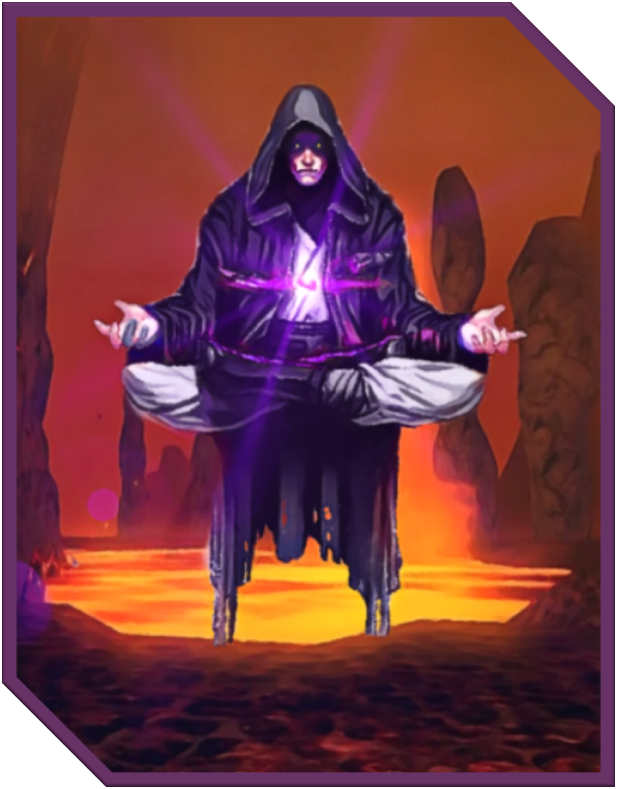 Following their escape from Korriban, the crew of the Red Raptor did not return to Republic space, nor did they immediately resume their pursuit of Axion. Instead, their path diverged into something less defined, but no less deliberate, which included brief tutelage for Thane on a new facility under his control on Mustafar under Zenarrah, gaining greater insight to forbidden Jedi combat practices. Operating through covert channels and utilising contacts cultivated during their prior movements, Thane began to establish this new Sith within the underworld networks that threaded through the Outer Rim. Chief among these connections was Hesk Scivo, a Muun intermediary whose influence across industrial and illicit supply chains provided the Sith with access to resources, intelligence and infrastructure that would have otherwise remained inaccessible. It was upon Sleheyron that this relationship was solidified. Acting in alignment with Scivo and the interests of Undervos Holdings, Amare assassinated a key senatorial figure also integral to Undervos Holdings. This assassination ensured control of the synthspice production lines passed fully into Scivo’s hands. Thane neither restrained nor moderated her actions, recognising in them both utility and proof of her progression. This alliance with Hesk Scivo would soon develop into further directed action against the Cult of Axion, as a partnership was formed with the vengeful Zorbo the Hutt to target and restrain Axion's own underworld dealings.  Parallel to these developments, Thane turned his attention toward deeper Sith knowledge. Tasking his apprentice with a mission of singular importance, he dispatched Amare to infiltrate the Jedi Temple on Coruscant and retrieve an artefact long believed secured within its archives: the Telos Holocron. Parallel to these developments, Thane turned his attention toward deeper Sith knowledge. Tasking his apprentice with a mission of singular importance, he dispatched Amare to infiltrate the Jedi Temple on Coruscant and retrieve an artefact long believed secured within its archives: the Telos Holocron.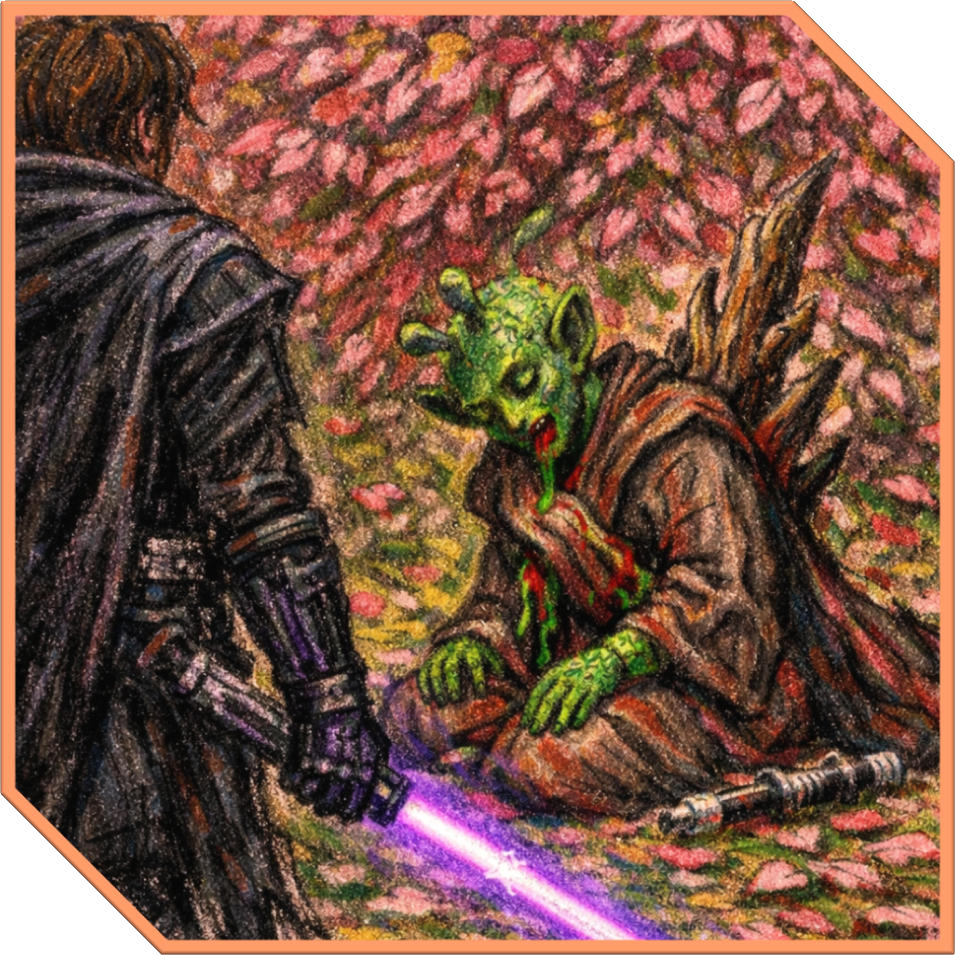 What transpired was not as anticipated. The holocron had already been removed from Jedi custody and had come into the possession of Rift Master Formeri - whom he and Amare then hunted. In the confrontation that followed, Formeri was brutally slain by the Sith, and the artefact claimed. Unlike the singular doctrine espoused by Darth Bane, the Telos Holocron presented a convergence of Sith philosophies, its gatekeepers offering conflicting interpretations of power, purpose and dominion. Thane did not reject these contradictions, but instead absorbed them, refining his own emerging ideology through synthesis rather than adherence. Within the holocron, he found a tutor he was deeply drawn to - Darth Plagueis. Alongside these developments came a more personal and brutal turning point. In the confrontation with her past, Amare faced her brother, Jett Versetto. The encounter ended in his death, severing the final tether she held to her former life. Thane neither intervened to prevent the outcome nor softened its consequences; instead, he allowed it to stand as it was – a necessary act of transformation. These events, taken together, marked the final erosion of Thane as a Jedi in all but name. What remained was something colder, more deliberate, and increasingly aligned with the identity he had chosen: Serus. Bastion: The Moff Civil War The next phase of their journey drew them into the territory of the Bastion Moff Empire, initially in pursuit of intelligence relating to GalactaWerks and their suspected exploitation of Mandalorian iron, as directed by Thane and Bomoor's one-time ally Theon of the Rift Jedi. What began as an investigation rapidly escalated into a conflict far greater in scale than anticipated. Latent tensions within the Empire, particularly between Grand Moff Valavai Tarses and the ambitious Moff Edwoff Anthark, were brought to the fore. The presence of Thane and his allies acted not as the cause, but as the catalyst for a fracture that had long been forming beneath the surface.  The resulting conflict culminated in the Battle of the Masserix Belt, a catastrophic engagement that would come to define the trio’s place within the wider galaxy. During the battle, Thane, Bomoor and Amare combined their strength through the Force in a manner rarely witnessed in the modern era. Reaching across the void, they exerted direct influence upon the movement of capital ships, turning the battlefield itself into a weapon. Under their unified will, the opposing Star Destroyers – the Enterprise and the Servator – were drawn from their trajectories and ultimately destroyed through collision. The act was as devastating as it was unprecedented. To the officers and crew of the Absolution, it appeared less as strategy and more as something mythic made manifest. In the aftermath, Thane and his allies were elevated within Bastion as major figureheads, prophesied by Grand Moff Tarses' own son as the inheritors of the Empty Throne, their actions credited with securing victory and preserving the Empire from internal collapse. Yet, whilst others saw saviours, Thane saw opportunity. Within the halls of Bastion’s leadership, the presence of the three Force wielders proved as disruptive as their actions in battle. Summoned before the assembled Moffs, Thane did not present himself as a servant of the Empire - but as something apart from it. When challenged, he demonstrated the reality of his power without hesitation. With a mere gesture, he brought Moff Quatervass to the brink of death, halting only at the command of Grand Moff Tarses. The display silenced opposition more effectively than any argument. He spoke then not as a petitioner, but as a herald, of looming war beyond their borders, and of enemies greater than internal dissent... Of the failure of both republics and empires to recognise the forces already moving against them - and of a truth long buried beneath history: that the Sith and the Empire had once stood as one. To reinforce this claim, the Telos Holocron was unveiled before the council. As it activated, the spectral form of Emperor Palpatine manifested within the chamber, his presence alone enough to still all voices. In that moment, the Sith ceased to be relics of the past and became an immediate, undeniable reality to those assembled. The Bastion Document Grand Moff Tarses entrusted Thane, Bomoor and Amare with an intelligence archive of extraordinary scale and sensitivity. This dossier, which would later become known publicly as the Bastion Document, constituted the most comprehensive body of evidence yet assembled concerning GalactaWerks' covert activities across the galaxy. The material extended far beyond Bastion’s recent dealings with the Company. It included decades of intelligence relating to GalactaWerks interference in Outer Rim affairs, clandestine support for Mandalorian factions and Exiles, covert arms transfers, political assassinations, sabotage operations and evidence of the Company’s manipulations leading into and during the Second Outer Rim Conflict. It also exposed the scope of Bastion’s own historical awareness of these matters, including information gained through its brief and ill-fated partnership with GalactaWerks. Reviewing the archive aboard the Red Raptor, Thane came to understand the true scale of the Company’s reach in galactic affairs. What had once appeared to be corruption, opportunism and criminality on a sector-by-sector basis was revealed instead as a coherent strategy of long-term influence, violence and economic domination. To Thane, the document represented not simply proof of wrongdoing, but a weapon; one that, in the proper hands, could destabilise GalactaWerks' legitimacy within both the Third Republic and the wider galaxy. At the same time, Amare brought further intelligence into their orbit through Hesk Scivo and Undervos Holdings. Scivo’s growing influence within underworld and corporate channels revealed additional compromising links between GalactaWerks operations and elements within the Reborn Jedi Order, deepening Thane’s contempt for the hypocrisy of the institutions he had once served and further reinforcing his view that both governments and Jedi had become complicit in the rot consuming the galaxy. The question was not whether the archive should be used, but how. Whilst departing Bastion space, the crew of the Red Raptor debated how best to release the material. Thane recognised that if the intelligence reached only one political bloc, it could be dismissed as manipulation or propaganda. Bomoor similarly reasoned that the archive would have to be transmitted in such a way that neither the Third Republic nor the Outer Rim Alliance could plausibly deny its legitimacy. Their existing arrangement with Theon of the Rift Jedi still stood, and it was understood that the data would be delivered to anti-GalactaWerks figures within the Alliance. However, before they could proceed directly to Alba, events intervened. Upon crossing the formal border of Bastion space, the Red Raptor received a tightly-banded secure transmission containing only three words: Hul, Bruta, Cult, along with coordinates for the world of Mygeeto. The message's reference to Bomoor’s father, Diplomat Bruta Thort, made the detour impossible to ignore. Thane judged the summons too personal and too precisely timed to be accidental, and the crew altered course immediately. On Mygeeto, they encountered Agent First Class Jella Valla of the Third Republic Intelligence Office, acting under the authority of Speaker of the Senate Damask Hul. Valla disclosed that Hul had been monitoring the Red Raptor crew for some time and was aware not only of their activities against the Cult of Axion, but also of their role within Bastion and the significance of the archive now in their possession. She further revealed that Hul had already committed support to Bruta Thort and to anti-corporate efforts on Öetrago, where GalactaWerks-linked proxy conflict was escalating around Bomoor’s family and the Elenca. Valla’s proposal was plain: Hul and TRIO would provide intelligence, political cover and practical support against both the Cult and the Jedi, in exchange for access to the Bastion Document and coordination in its release. Thane quickly perceived the deeper purpose behind the offer. Hul did not merely wish to expose GalactaWerks; he sought to weaponise the revelations against Supreme Chancellor Paralles and the political order shielding the Company, elevating his own Centrality faction in the process. Even so, Thane judged the arrangement worthy of acceptance. He reasoned that Theon would release the material through the Outer Rim Alliance regardless, and that simultaneous exposure within both the Republic and Alliance spheres would maximise the damage inflicted upon GalactaWerks.  An agreement was therefore struck. The Bastion Document would be revealed publicly through converging channels, with the Outer Rim Alliance and Hul’s office each ensuring that the material could not be buried, discredited or quietly suppressed. In return, TRIO provided a direct line of communication to the crew through the NX-series field intelligence droid NX-02, alongside further intelligence on the Cult of Axion, the Reborn Jedi’s pursuit of the former Jedi fugitives, and the brewing conflict on Öetrago. When the document was finally made public, the effects were immediate and far-reaching. Supreme Chancellor Paralles was forced into a defensive public statement, carefully avoiding any direct acknowledgment of complicity whilst promising inquiry and restraint. By contrast, Davos Stal and the Outer Rim Alliance openly endorsed the authenticity of the archive, presenting it as long-awaited proof of the Republic’s corruption and GalactaWerks’ predatory influence upon the Outer Rim. Most striking of all, Bastion itself issued a formal public confirmation that the disseminated material was genuine - the first such direct Bastion intervention in galactic political discourse in generations. GalactaWerks, for its part, issued a denial in the expected corporate language of legality, public service and false outrage, but the significance of the moment was already clear. The Company had been exposed on a galactic scale; Bastion had broken its silence; and the powers of the Republic, the Alliance and numerous lesser actors were now being forced to respond. For Thane, the significance of the Bastion Document lay not only in its political consequences, but in what it represented. The archive was not merely evidence of corruption, but proof that the new Sith could exert influence not only through fear and power, but through the manipulation of truth itself. It was another extension of Serus’ will - a catalyst by which governments, corporations and ideologies alike could be set against one another and forced to reveal their true nature. It was this chain of events that led directly to Öetrago. Öetrago: The Breaking Point A campaign had been initiated on Bomoor's homeworld by Tolmin Voq, a prominent member of the Cult of Axion, operating in alignment with GalactaWerks interests. The operation was not merely one of territorial influence or resource acquisition in a local civil conflict Mumin was already involved in, but a calculated effort designed to harm the Red Raptor crew directly. Recognising both the personal stakes and the strategic intent behind the move, Thane, Bomoor and Amare committed fully to the defence of Öetrago. Upon arrival, they entered into open conflict across both ground and air. The battle was decisive in its outcome. Voq’s forces were broken, his campaign halted, and control of the immediate theatre restored. Despite their victory, Bomoor was unable to reach his mother in time. She was murdered by Voq during the height of the conflict, an act carried out with deliberate cruelty, ensuring its impact extended far beyond the battlefield itself. The loss shattered what restraint Bomoor had maintained. In the aftermath of the battle, he abandoned the discipline that had defined him as a Jedi, giving himself over to rage and grief. In doing so, he stepped truly into the dark side of the Force. The crew of the Raptor withdrew from active theatres of conflict, seeking temporary reprieve on the world of Irrikut. Bomoor’s fall required stabilisation, not suppression. Where once he had carefully adjusted to or observed Thane’s divergence from Jedi doctrine, he now found himself adrift within the very darkness he had perhaps once feared. His anger was unrefined, volatile, and without direction - and Thane chose not to restrain him. On Irrikut, Thane and Bomoor reached a new understanding. No longer divided by philosophy, if they ever truly had been, nor bound by the expectations of the Jedi, they committed themselves fully to a singular purpose: the eradication of the Cult of Axion. Hunting the Enclaves Bespin: Corruption in the Clouds 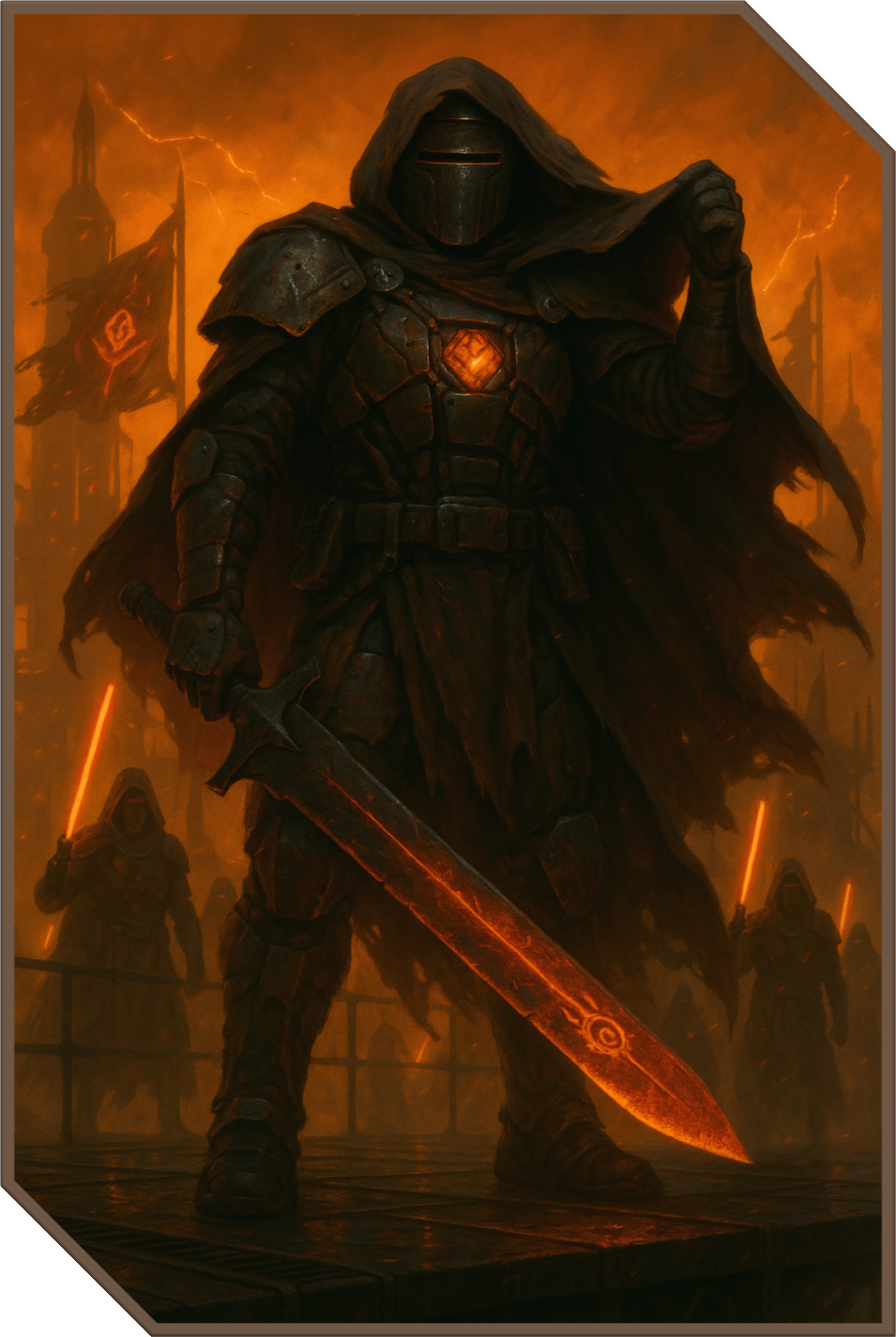 Bespin marked the first true proving ground of their campaign against the Cult of Axion, not merely as a target of opportunity, but as a deliberate opening strike. The enclave hidden within Cloud City represented everything he despised in their methodology: imitation masquerading as mastery, power drawn through suffering yet never understood. Their attempts to replicate Kaiburr resonance through crude crystal forges and enslaved labour confirmed his suspicion that the Cult’s strength was built on theft rather than comprehension. For Thane, this was not simply an enemy to be removed, but a thesis to be disproven. The destruction of the Bespin enclave became a statement of intent - that false power, no matter how widespread or entrenched, would collapse when confronted by will sharpened with purpose. 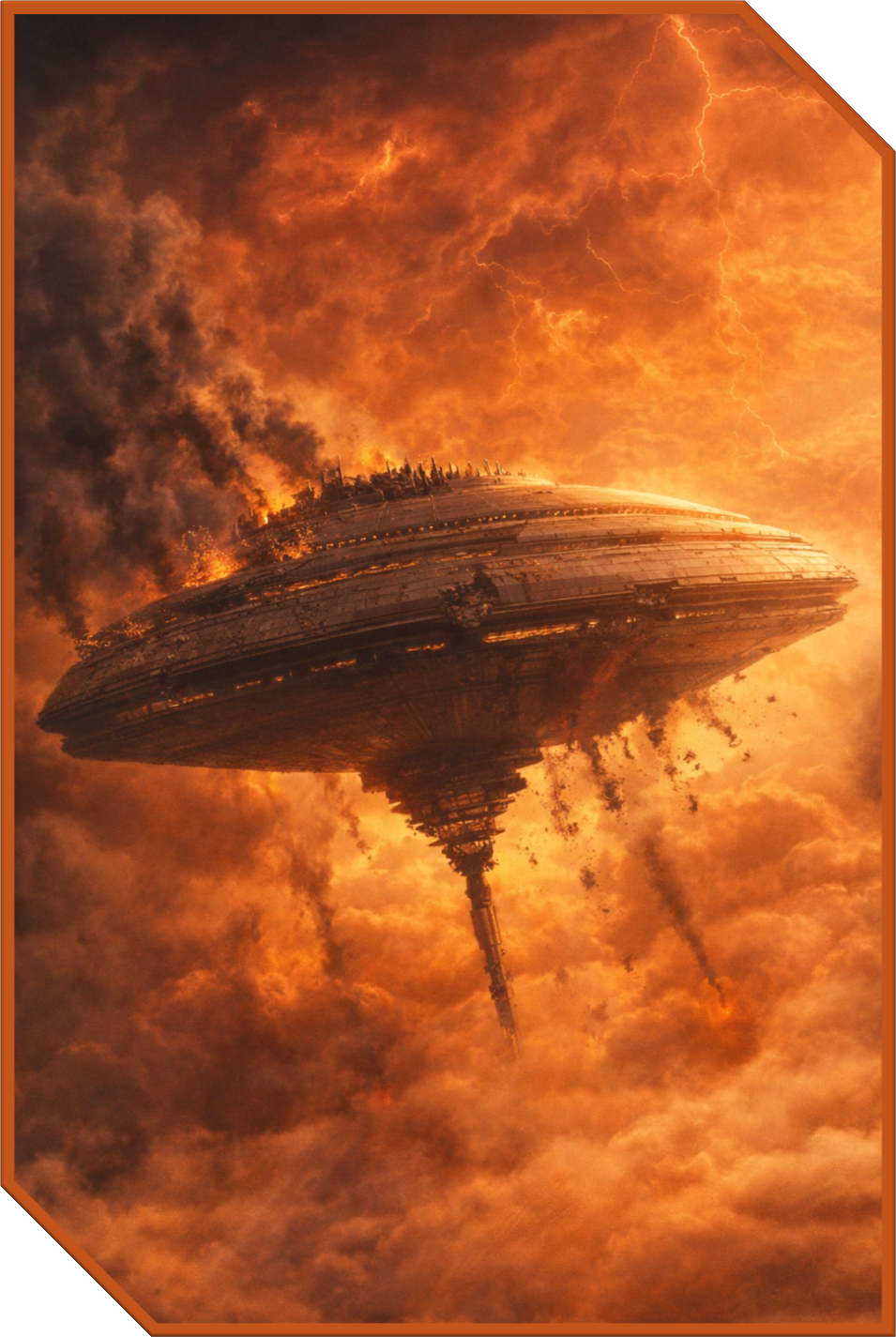 The fall of Cloud City itself, though tactically extreme, cemented Bespin as the moment they ceased reacting to the Cult and began actively hunting it. The enclave’s annihilation demonstrated both the crew's capacity for systemic destruction and their willingness to escalate beyond conventional limits to achieve it. It also revealed early fractures in Thane's own path: the resistance within his lightsaber, the unpredictable amplification of Amare’s power, and the first clear signs that the Cult’s influence extended deeper into the Force than anticipated. New Alderaan: The Starwyrd Bargain Following Bespin, Thane’s attention turned toward New Alderaan, where intelligence and instinct alike suggested the Cult’s influence had taken root through a mysterious compact known as the Staywyrd Bargain, which had clear correlations to the mythology surrounding Axion himself. House Wyrd, one of the planet’s oldest and most respected noble families, had long operated as a discreet but influential presence within the wider currents of the Third Republic. Upon arrival, Thane, Bomoor and Amare entered the estate under the guise of honoured guests, quickly discerning that the house’s prosperity and social authority concealed something older and more unnatural beneath its refined surface. What began as an exercise in infiltration and observation soon revealed itself to be a confrontation with a form of power distinct from the Sith traditions Thane had studied: through the ritualised compact they initially understood as the Starwyrd Bargain, through which the first Lord Wyrd had bound himself into the foundations of the estate in exchange for stability, influence and the continued prominence of his bloodline. Sustained through generations by Axion’s agents, most recently by the Miralukan vizier Melliah Glynt, the bargain had become less a pact than an inherited system of quiet domination, exerting subtle pressure upon minds, politics and probability itself. The power there was used to wipe and twist the minds of those with power and intent to become servants and allies of the Cult of Axion throughout the Third Republic. 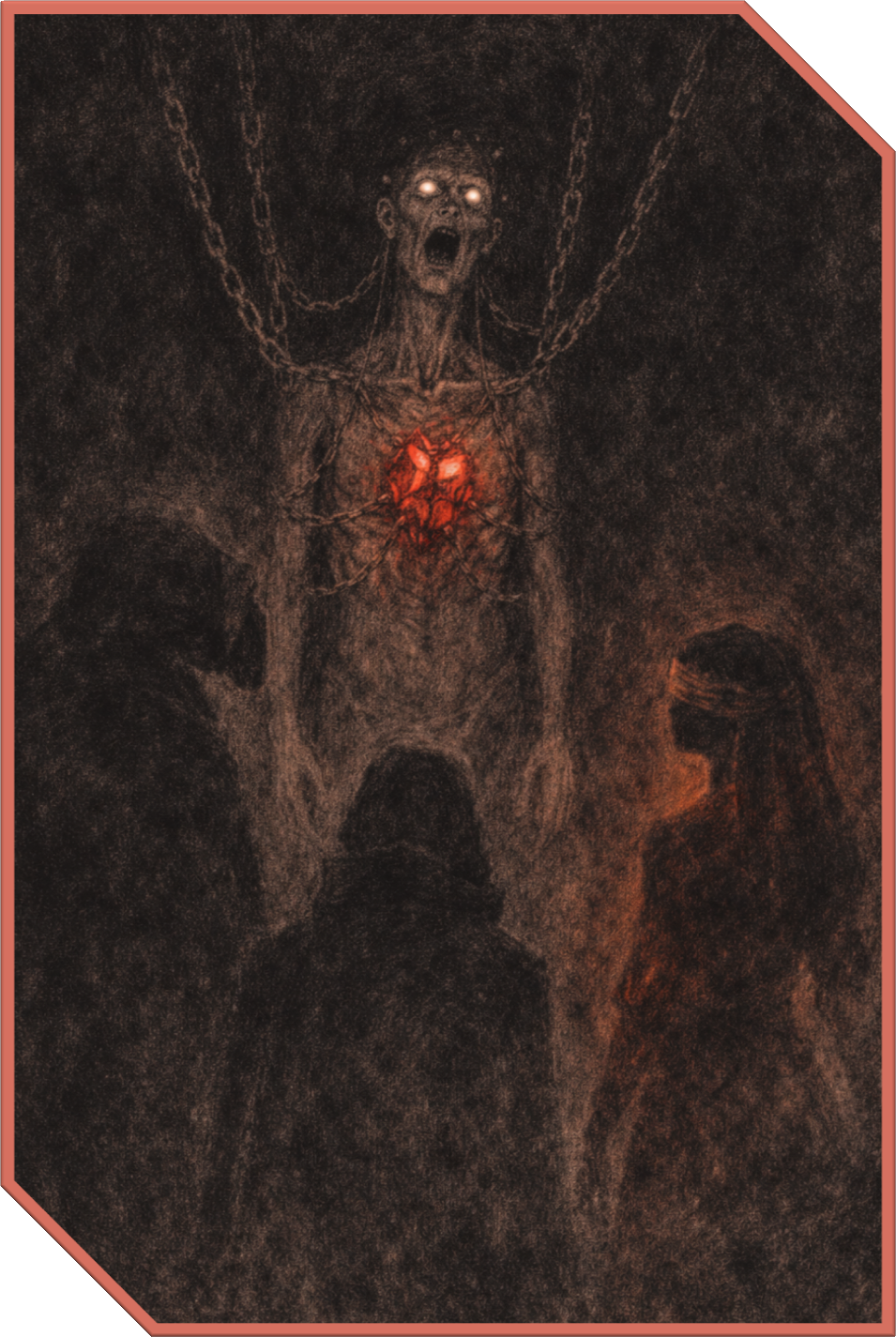 The destruction of this hidden structure marked a decisive turning point in Thane’s evolution. Descending with Bomoor into the ritual chamber beneath the estate, he confronted both the grotesque remains of the first Lord Wyrd and the occult force sustaining the house, even as Amare endured a brutal psychic assault at Glynt’s hands. Refusing to allow either his apprentice’s collapse or the chamber’s oppressive influence to break his will, Thane unleashed a devastating torrent of Force lightning that shattered the keystone, destroyed the ancient lord and brought the entire arrangement to ruin. In the immediate aftermath, he spared Glynt only so that she might return to Axion bearing witness to the failure of his servants, but when Lord Caelric Wyrd wavered between repentance and fury, Thane acted with ruthless finality, killing him and his armed retinue before they could become a future liability. The surviving heir, Alric Wyrd, was thus left to inherit a house abruptly severed from centuries of secret dependence. For Thane, New Alderaan was not merely another victory against the Cult, but the moment he began to move beyond the role of hunter and toward something more severe: a figure willing not only to destroy corrupted structures, but to replace them with loyalties of his own design. Corulag, Ord Mantell and Varl: The Hunt Tightens Following the events on New Alderaan, Thane and the crew of the Red Raptor intensified their campaign against the Cult of Axion, no longer content to react to its provocations or disrupt isolated operations only as they arose. With Bomoor now fully committed beside him and Amare increasingly fearsome in her own right, the group moved with greater purpose against a succession of enclaves, proxy interests and compromised holdings believed to serve Axion's wider network. This phase of the conflict carried them across multiple worlds, including Corulag, Ord Mantell and Varl, where each operation further revealed the extent to which the Cult had embedded itself within political, industrial and criminal structures alike. It was during this phase that the balance subtly shifted, as they found success in some regard at each location, still supported by their allies within TRIO and Undervos Holdings/the Hutt Cartel. By every outward measure, the crew of the Red Raptor had begun to seize the initiative. They had broken enclaves, ruined operations and demonstrated that even Axion's chosen servants could be hunted down and destroyed. In truth, however, it was likely this very success that made them vulnerable. Their campaign had become too effective to ignore. Axion, who had until then remained elusive even while his designs spread from world to world, chose at last to answer not with another distant proxy, but with a trap fashioned to break them at the level of their unity. That answer came on Sleheyron. Sleheyron: The Face of God The trail led the Red Raptor crew to the synthspice production facility on Sleheyron operated through Undervos Holdings under the authority of Hesk Scivo on behalf of the SIth, by then an increasingly significant figure within the industrial and criminal structures surrounding Serus' growing sphere of influence. Reports from the site described conditions that were not merely unstable, but deeply wrong: workers behaving with unnatural calm despite mounting casualties and sabotage, repeated hallucinations across sectors of the facility, and glyph-like markings appearing throughout the structure in ways that suggested not vandalism, but ritual intrusion. Scivo himself judged the situation severe enough to seek direct intervention, warning that the disturbances bore the signs of the Cult of Axion and implying, correctly, that the entire arrangement had likely been shaped as a deliberate lure. The crew entered regardless. Within the factory, the pressure mounted quickly. Environmental failures, psychological distortion and violence from the compromised workforce fractured the group's cohesion, separating them across the facility's industrial superstructure. What had begun as a coordinated intervention descended into a series of parallel ordeals. Mentis, Rex and Reave were drawn into brutal fighting within the industrial core. Bomoor and Amare became isolated amid the escalating chaos and the direct pressure of Axion's inner circle. Thane himself was drawn away through the lower processing sectors by the appearance of his long-dead brother, Ventul. What followed became one of the defining catastrophes of Thane's life. Led deeper into the factory by this apparition, Thane discovered not an illusion in the simple sense, but Ventul as he might have been: older, grown, and twisted into service beneath Axion's will. Confronted with the impossible reality of his brother restored only to be hollowed out and weaponised, Thane faltered in a way he had rarely allowed himself to do. Even as Ventul attacked him with lethal intent, Thane refused to answer in full, seeking some surviving fragment of the brother he had lost as a child. This hesitation proved fatal in every sense but the immediate physical one. Under Axion's command, Ventul turned his weapon upon himself rather than return to Thane, dying in his brother's arms after a final, broken instant of fear and failed recognition.  It was at that moment, as Ventul's body went still, that Axion revealed himself. It was at that moment, as Ventul's body went still, that Axion revealed himself.Descending through the heat and haze of the factory in effortless flight, haloed in red distortion and adorned with a ritual war-gorget set with Kaiburr shards, Axion confronted Thane in a form far beyond what had been seen on Nar Shaddaa. Their ensuing duel has since come to stand as one of the central turning points in Thane's life and in the wider history of the new Sith. Throughout the engagement, Axion demonstrated overwhelming superiority, moving with unnatural fluidity, layering Soresu precision with Makashi contempt and wielding Kaiburr-enhanced Force power in ways that rendered ordinary duelling logic unstable. Thane, driven by grief, humiliation and rage, pressed him relentlessly. Although his lightsaber crystal continued to resist him, costing him critical fractions of precision, he nevertheless succeeded in striking and damaging one of the Kaiburr shards mounted within Axion's gorget, then using Axion's own redirected lightning to shatter it entirely. For a brief instant, it appeared that Thane had achieved something unprecedented: he had cracked Axion's seeming invulnerability and forced him into a more direct contest of blades. This too was a misreading. Drawing upon lessons imparted by Zenarrah and giving himself more fully to rage, Thane abandoned the refined structures of Makashi and Niman in favour of a harsher, more aggressive approximation of Vaapad. In that state he succeeded in driving Axion backward, carving through catwalks, machinery and chemical lines as the facility around them descended into wider collapse. Yet in doing so, he overcommitted. Believing Axion at last to be vulnerable in a recognisable way, he pressed too hard and too openly. Axion responded with devastating speed and total control, turning beneath Thane's assault, seizing him in the Force, and dragging him high above the disintegrating factory through Kaiburr-assisted flight. From there, Axion cast him down.  Thane struck the lower structure with catastrophic force before crashing into a spreading pool of volatile chemical runoff. The impact shattered ribs, wrecked much of the right side of his face and inflicted grave trauma across his body. Worse still, the compound itself began to burn through him almost immediately. Axion descended after him and, in an act of intimate and calculated cruelty that later became known among the crew and creators alike as The Smushing, forced the ruined Sith's face down into the corrosive liquid beneath his boot. The injuries from this act proved permanently disfiguring, destroying Thane's right eye and leaving him with severe burns and lasting damage that would physically define the figure he later became. Thane struck the lower structure with catastrophic force before crashing into a spreading pool of volatile chemical runoff. The impact shattered ribs, wrecked much of the right side of his face and inflicted grave trauma across his body. Worse still, the compound itself began to burn through him almost immediately. Axion descended after him and, in an act of intimate and calculated cruelty that later became known among the crew and creators alike as The Smushing, forced the ruined Sith's face down into the corrosive liquid beneath his boot. The injuries from this act proved permanently disfiguring, destroying Thane's right eye and leaving him with severe burns and lasting damage that would physically define the figure he later became.Axion departed believing Thane finished. He was wrong, but only partly. Thane survived the encounter through the sheer hateful insistence of the dark side and the later efforts of his allies, yet Sleheyron marked the destruction of whatever remained of his former self in any stable sense. The crew entered the facility as an effective unit and emerged from it as survivors of separate failures. Amare had been taken. Bomoor had been incapacitated through the consequences of his bond with Thane. The wider battle against the Cult had not ended, but the terms of it had changed irrevocably. For Thane, Sleheyron was not simply a defeat. It was the crucible in which Lord Serus ceased to be a private Sith identity and became the only future left to him. The Rise of Darth Serus (1,219 ABY - ) Öetrago: Anointed  Following the catastrophe on Sleheyron, Thane was recovered from the collapsing synthspice facility by the surviving members of the Red Raptor crew, though only through extreme emergency intervention did he survive the journey from the ruined site. His injuries were catastrophic: severe chemical burns across the right side of his face, the destruction of his right eye, extensive respiratory trauma, spinal and skeletal damage, and widespread systemic shock. Aboard the Red Raptor, the emergency medical holodroid 2-1BH, supported by NX-02, G2-O7, Brick and the reconstructed Fabricant automaton Faze, improvised stabilising surgery sufficient only to keep him alive. The treatment preserved his life, but it did not restore what had been taken. Thane emerged from Sleheyron permanently altered, dependent upon cybernetic and respiratory augmentation, his body now bearing the visible consequences of Axion's victory. Following the catastrophe on Sleheyron, Thane was recovered from the collapsing synthspice facility by the surviving members of the Red Raptor crew, though only through extreme emergency intervention did he survive the journey from the ruined site. His injuries were catastrophic: severe chemical burns across the right side of his face, the destruction of his right eye, extensive respiratory trauma, spinal and skeletal damage, and widespread systemic shock. Aboard the Red Raptor, the emergency medical holodroid 2-1BH, supported by NX-02, G2-O7, Brick and the reconstructed Fabricant automaton Faze, improvised stabilising surgery sufficient only to keep him alive. The treatment preserved his life, but it did not restore what had been taken. Thane emerged from Sleheyron permanently altered, dependent upon cybernetic and respiratory augmentation, his body now bearing the visible consequences of Axion's victory.He was later transferred to the Ithorian-Bith medical facility on the Dunari's Delight, in the Myagil sector of Öetrago, where more sophisticated treatment stabilised his condition. During recovery, Thane awoke within a medical tank and, gripped by panic, trauma and the memory of chemical immersion, lashed out through the Force, shattering the tank and injuring or scattering the attending Ithorian healers. In the aftermath, he was forced to confront the reality that his body could no longer function as it once had. With Bomoor present, he accepted a photoreceptor in place of his destroyed eye and a thin black respirator integrated with the reconstructed systems of his throat, jaw, chest and mouth. The devices did not merely compensate for his wounds; they became part of the identity that would follow, granting him sight, breath and speech through artificial precision where the natural form had failed. The consequences of Sleheyron were not only physical. Amare had been taken by the Cult of Axion, Bomoor had suffered deeply through the Force bond he shared with Thane, and the crew's campaign against the Cult had been transformed from a series of calculated strikes into something far more personal and severe. For Thane, however, the defeat carried a still deeper meaning. He came to regard Sleheyron not as a tragedy alone, but as proof that both the loyal Jedi he had once been and the vengeful dark-side warrior he had become were insufficient. Restraint had failed. Rage had failed. What was required was not a return to either, but the creation of something unified, disciplined and absolute.  On Öetrago, in the abandoned settlement of Elenca where Bomoor's mother Mumin Mozo had been killed, Thane entered her hut alone and disassembled his lightsaber. Rather than replace the Hurrikaine crystal that had resisted him, he chose to master it. Removing his respirator and enduring the pain of unassisted breath, he forced his will into the crystal and experienced a vision of an impossible alternative life: Loren alive, Bomoor whole, the Jedi reconciled, the galaxy resolving without ruin or imposition. Thane rejected the vision as false, recognising that it preserved comfort without cost and denied the necessity of decisive will. When he returned to the hut, the crystal had bled from violet into a bloodshine Sith red. His weapon no longer resisted him. It had submitted. On Öetrago, in the abandoned settlement of Elenca where Bomoor's mother Mumin Mozo had been killed, Thane entered her hut alone and disassembled his lightsaber. Rather than replace the Hurrikaine crystal that had resisted him, he chose to master it. Removing his respirator and enduring the pain of unassisted breath, he forced his will into the crystal and experienced a vision of an impossible alternative life: Loren alive, Bomoor whole, the Jedi reconciled, the galaxy resolving without ruin or imposition. Thane rejected the vision as false, recognising that it preserved comfort without cost and denied the necessity of decisive will. When he returned to the hut, the crystal had bled from violet into a bloodshine Sith red. His weapon no longer resisted him. It had submitted.From there, Thane and Bomoor travelled to a remote copse beyond Elenca, where ancient Rakatan-style ruins lay half-buried among trees and mist. There, with Bomoor as witness, Thane arranged the holocrons of Darth Bane, Darth Krayt and the Telos Holocron around him. Before the gatekeepers of Sith history, including Bane, Plagueis, Sidious, Krayt, Vectivus and Kas'im, he declared that what he had been no longer governed what would follow. Thane was not erased, but subordinated. The truth of him had become Serus. The gathered Sith echoes recognised what had already occurred. Darth Plagueis spoke the formal acknowledgement, declaring that Thane had been discarded and that the being before them was the Dark Lord of the Sith. Together, the gatekeepers named him Darth Serus. In that moment, Serus stood not as an acolyte, apprentice or pretender, but as the only true living Sith Lord and the reigning master of a reborn Sith tradition. The anointing did not create Darth Serus. It confirmed him. With his blade now red, his body remade, and his identity resolved, Darth Serus emerged from Öetrago as something more than a fallen Jedi or fugitive Sith. He had become a figure of purpose, authority and imposition, committed to destroying Axion, reclaiming or replacing his lost apprentice, and reshaping the fractured galaxy through the will of the Sith. The age of Thane's uncertainty had ended. The age of Darth Serus had begun. |