Technology of the New Age
Created by Bomoor Thort on Wed Sep 9th, 2026 @ 1:50pm
TECHNOLOGY OF THE NEW AGE
SWANA SETTING REFERENCE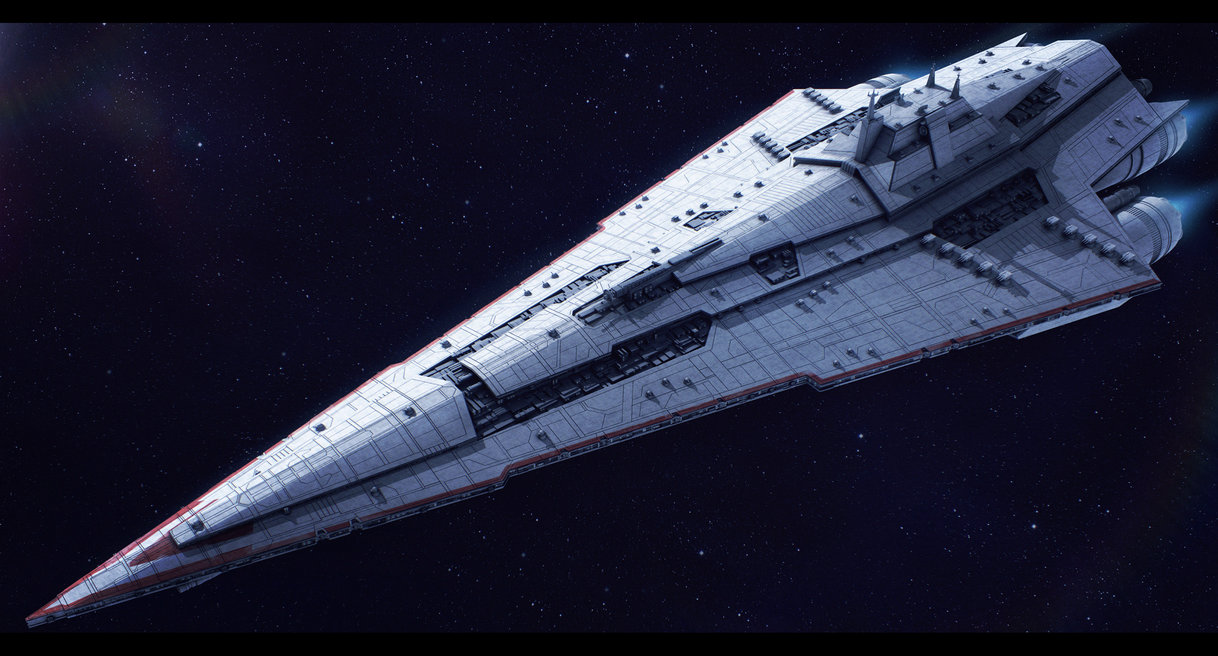
PRIMARY ERA | c. 1219 ABY
Comprehensive worldbuilding and visual-design frameworkContents and Authority
This document consolidates the technological logic of Star Wars: A New Age into a single shareable reference. It draws upon the existing Data Archives, the established history of the Galactic Dark Age, later decisions concerning population and warfare, and the long-term GalactaWerks programme surrounding the Sistros Sphere.- 1. Executive synthesis
- 2. The historical foundation: collapse, survival, and recovery
- 3. The governing principles of New Age technology
- 4. Visual and material language
- 5. Droids, automation, and artificial intelligence
- 6. Starships, vehicles, and fleet technology
- 7. The corporate and industrial order
- 8. Factional technological identities
- 9. Military and intelligence consequences
- 10. GalactaWerks as a technological state
- 11. The Sistros convergence
- 12. Design rules for future SWANA technology
- 13. Sources and visual reference catalogue
Scope note
The document defines the setting's technological character rather than attempting to catalogue every individual device. It is intended to guide new ships, droids, weapons, infrastructure, military doctrine, and plot technology while preserving a recognisably Star Wars material culture.1. Executive Synthesis
1.1 What 'advanced' means
- • Greater efficiency: more useful output from a familiar reactor, engine, shield generator, sensor array, or weapon system.
- • Greater integration: functions once divided between several machines can be combined without creating an all-purpose miracle device.
- • Greater specialisation: rare machines can be extraordinarily capable within a narrow role while remaining expensive, fragile, restricted, or scarce.
- • Greater autonomy: droids, fighters, and remote systems can operate with less direct supervision, but not without boundaries, infrastructure, or vulnerability.
- • Greater refinement: inherited forms become cleaner, faster, better shielded, easier to operate, or more adaptable rather than wholly unrecognisable.
1.2 What it does not mean
The setting should not drift into a frictionless post-scarcity civilisation, ubiquitous nanotechnology, abstract light-only machinery, omnipotent artificial intelligence, or sterile contemporary science fiction. Technology remains physical. It has mass, heat, noise, maintenance demands, access panels, cables, worn surfaces, manufacturing tolerances, and institutional owners. The most advanced machine in a system can still be defeated through logistics, sabotage, degraded components, poor doctrine, political interference, or the destruction of the infrastructure that sustains it. The decisive question is not merely whether a technology exists. It is who can build it, who can maintain it, how many examples can be fielded, what trade-offs it carries, and which organisation controls the standards and supply chains around it.2. The Historical Foundation
2.1 A mature technological civilisation
Long before the New Age, the galaxy had already mastered hyperspace travel, artificial gravity, energy shielding, directed-energy weapons, sophisticated droids, cybernetics, planetary engineering, stasis, cloning, and the construction of immense orbital works. This maturity explains why later progress often appears as a return to an old idea. The concept was not forgotten everywhere; what was lost was the ability to reproduce it reliably, economically, or at scale.2.2 The Galactic Dark Age
The Galactic Dark Age followed the devastation and political fragmentation associated with the New Mandalorian Crusades. Its defining losses were not confined to laboratories. Depopulation removed engineers, navigators, technicians, administrators, and skilled industrial labour. Archive destruction broke chains of knowledge. Displacement severed apprenticeships and corporate lineages. Hyperlane insecurity isolated markets. Shipyards lacked components, mines lost customers, and governments could no longer guarantee standards, currency, contracts, or long-distance maintenance. The decline was therefore uneven and recursive. A world might retain an advanced reactor design but lose the alloys required to build it. A fleet might possess functioning warships but no longer understand every system within them. A corporation might preserve trademarks, partial archives, and hereditary expertise while losing its original factories. Conversely, a peripheral society might maintain a robust local technology because it relied upon repairable machinery, dispersed production, and knowledge embedded in daily practice.2.3 Survival by institution
Technological survival was closely tied to institutional survival. Corporate remnants merged for protection. Guilds pooled risk. State arsenals preserved military traditions. Technician families and species-based communities guarded specialist knowledge. Certain famous brands were reconstructed centuries later from incomplete frameworks because their names still carried public trust. The modern corporate map is therefore also a map of what survived the Dark Age and under whose custody.2.4 Recovery under the Third Republic
The restored Third Republic encouraged reconnection, investment, common credit, and the reconstruction of interstellar trade. This allowed populations and industry to recover, but it did not erase the unequal foundations of that recovery. GalactaWerks became integral to shipping, droid manufacture, armaments, communications, and state logistics. Other companies survived by occupying protected niches, preserving regional loyalty, accepting quasi-national status, or remaining beyond easy acquisition. By 1219 ABY, the galaxy is capable of mass war again, but not because every world possesses the industrial abundance of the Clone Wars or the First Galactic Empire. It is capable because populations have recovered, old manufacturing traditions have been recombined, major centres have accumulated resources, and states can once again mobilise large but finite networks of worlds. These capacities remain politically fragmented and strategically vulnerable.| Historical phase | Technological condition |
|---|---|
| Galactic maturity | Core technologies are already ancient; progress concentrates upon refinement and scale. |
| Dark Age collapse | Population, archives, routes, institutions, and supply chains fracture unevenly. |
| Institutional survival | Guilds, dynasties, states, species communities, and corporate remnants preserve different disciplines. |
| Republican recovery | Trade, credit, and common standards return, with GalactaWerks embedded in the reconstruction. |
| New Age, c. 1219 ABY | Recovered capacity supports major war, but technology remains scarce, regional, inherited, and politically controlled. |
3. Governing Principles of New Age Technology
3.1 Inheritance before replacement
Designs endure because the wider ecosystem around them endures. Docking standards, repair tools, power couplings, pilot training, spare parts, software conventions, and cultural familiarity can preserve a chassis for centuries. A successful modern design is therefore often a descendant, spiritual successor, reconstruction, or radical modification of an older one.3.2 Recombination before revolution
The most characteristic New Age inventions combine disciplines that earlier eras kept separate. A protocol droid becomes a lethal bodyguard. A construction platform becomes a tank. A command ship serves simultaneously as fleet nexus, corporate headquarters, investor venue, and droid-control centre. A medical droid's trusted appearance survives as the projected interface for a distributed medical system. Innovation lies in the relationship between parts as much as in any single component.3.3 Existence is not availability
A rare stealth corvette may possess the most advanced reconnaissance suite of the era while ordinary patrol forces still rely upon conventional sensors. A state may know how to produce a powerful capital ship but lack the resources, crews, or yards to build many. A Jedi craft may be exceptional in combat yet remain dependent upon a hyperspace ring. Technology should always be assessed through cost, access, production rate, maintenance, and strategic scarcity.3.4 Every advance retains a trade-off
New Age technology should not erase operational choices. Speed competes with armour. Firepower competes with endurance. Stealth competes with cost and power. Autonomy creates susceptibility to slicing, signal denial, or command disruption. Modular vehicles sacrifice peak performance for adaptability. Mass-produced systems are affordable but predictable. Bespoke systems are formidable but difficult to replace.3.5 Repairability is strategic power
The ability to keep a machine operating across poor infrastructure can be more valuable than theoretical superiority. Corellian modularity, Alliance ruggedness, common GalactaWerks parts, and Bastion's ability to renovate Dark Age hulls all represent different forms of technological strength. Mechanics, depots, salvage, compatible components, and trained crews belong within military worldbuilding rather than behind it.3.6 Networks create both power and fragility
The modern galaxy is more interconnected than the Dark Age galaxy, and much of its apparent advancement comes from that renewed integration. Sensor fusion, fleet coordination, proprietary communications, hyperspace beacons, logistics databases, and droid-control architectures allow fewer assets to act with greater coherence. The same systems create central points of failure. Destroyed relays, corrupted navigational data, false orders, compromised command ships, and proprietary lockouts can transform a superior force into isolated components.3.7 Exceptional technology remains exceptional
Sistros, Kaiburr-based systems, advanced Force amplification, world-consuming machinery, and the most sophisticated stealth vessels must not become an everyday measure of the era. Their narrative force depends upon the extreme concentration of resources, hidden research, or unique materials required to create them.4. Visual and Material Language
The visual vocabulary should communicate technological descent before exposition does. New machines may be more refined, but their ancestry remains legible. A viewer should be able to recognise an astromech, probe, protocol unit, X-Wing descendant, Star Destroyer lineage, TIE derivative, or industrial walker even when its proportions and functions have developed significantly.VISUAL GRAMMAR AT A GLANCE
| Design cue | New Age reading |
|---|---|
| Ancestry | The technological family or cultural lineage is recognisable before the individual model is explained. |
| Construction | Panels, fasteners, access points, joints, vents, cables, and weapon housings keep the machine physically intelligible. |
| Modernisation | Refined proportion, integration, materials, sensors, and power use signal improvement without erasing the inherited form. |
| Service history | Wear, replacements, repairs, and uneven finishes reveal ownership, scarcity, and the life of the machine. |
| Faction | Geometry, colour, maintenance culture, and modular choices express political identity rather than a universal New Age style. |
DROID DESIGN REFERENCES

01 - G2-series astromech droid
|
.png)
02 - K30-Series protocol Droid
|

03 - GWM-1 Series "Battle Droid"
|

04 - Nimbus-series Probe Droid
|
4.1 Droids
- Use distinct silhouettes. Function should shape the body more strongly than a universal humanoid template.
- Retain seams, fasteners, access plates, exposed joints, cables, optical housings, vents, and mechanical articulation.
- Allow premium or ceremonial plating, but do not conceal every working part beneath featureless armour.
- Treat wear as evidence of service history. Scratches, discolouration, replacement panels, and uneven finishes are part of the setting's material truth.
- Use ochre, brass, muted gold, tan, gunmetal, black, and factional accents without making every machine share a single palette.
4.2 Starships and vehicles
- Preserve strong inherited silhouettes: hammerheads, wedges, split wings, TIE panels, bulbous Mon Calamari forms, Corellian modularity, and functional walkers.
- Modernity should appear through proportion, surface refinement, embedded systems, cleaner structural transitions, and altered mission architecture.
- Military hulls may be clean or ceremonially maintained, but they should still display plating, weapon housings, apertures, engine structures, and comprehensible points of access.
- Avoid visual homogenisation. Republic civic white, GalactaWerks industrial utility, Alliance local variation, and Bastion Imperial geometry should remain distinguishable at a glance.
4.3 Familiarity without repetition
The purpose of inherited imagery is not to reproduce a film-era vehicle under another name. The silhouette establishes cultural memory; changed proportions, mission, systems, and institutional meaning establish the New Age. The Xesh-Wing is effective because it invokes the myth of the X-Wing while belonging to a Republic that has turned that myth into state symbolism. Bastion's TRI fighter invokes the TIE while revealing a later compromise between mass production, shielding, and retained carrier dependence.
5. Droids, Automation, and Artificial Intelligence
5.1 Utility and astromech development
Astromechs remain indispensable because starships still require machines able to navigate, diagnose, repair, and improvise inside hostile mechanical environments. The G2-series uses an unconventional globe-like and wheeled chassis to work in constrained spaces. The larger G4-series serves as a fleet mainstay, with greater battlefield mobility. The A2 applies related principles to construction and untamed terrain, while the Y8 reduces personality expression in favour of clinical and theoretical research performance.
These models demonstrate that development does not require a single successor to render every earlier droid obsolete. Different chassis remain optimal for different environments, and manufacturers cultivate recognisable families of machines rather than converging upon one universal design.
5.2 Protocol, advisory, and holographic embodiments
Protocol droids continue to provide etiquette, translation, administration, and social mediation, but their functions can extend into military logistics and tactical advice. The formal 99-series is suited to government and naval service because it contains a reserve of operational knowledge without being designed primarily for public charm. The enduring 2-1B image survives in holographic medical interfaces because cultural trust can outlive the physical machine that first created it.
A holographic droid is not disembodied magic. It is an interface attached to databases, emitters, diagnostic equipment, local permissions, and physical treatment systems. It can project expertise throughout a ship while still depending upon hardware and remaining legally distinct from a qualified organic physician.
5.3 GalactaWerks military droids
GalactaWerks fields a deliberate hierarchy of military machines. The GWM-1 is a competent, affordable footsoldier. The GWM-2 adds armour, leadership capacity, and cost. The GWM-3 carries heavy weapons and survives punishment in anti-vehicle roles. The GWM-4 returns to the ancient destroyer-droid concept with improved mobility, shielding, and sensor coverage. The V1 is a restricted assassin model developed specifically for anti-Jedi operations.
The ZT-series occupies a different niche. Its protocol functions permit proximity to wealthy or politically important owners, while its armour, mobility, and combat repertoire make it an elite bodyguard. The threat lies as much in social access as in firepower. This is characteristic of GalactaWerks integration: a public-facing function creates the conditions for a coercive one.
5.4 Probes, surveillance, and legal control
The J3 astroprobe combines navigation, communications, and sensor work in a small field platform. The Nimbus-series supports Republic surveillance but is restricted by law, with privileged permissions for GalactaWerks and favoured institutions. Such controls matter. The political authority to deploy a sensor can be more consequential than its technical specification, particularly when private and state interests overlap.
5.5 The boundary of artificial intelligence
Droids can be adaptive, insightful, eccentric, loyal, officious, or dangerously capable. They do not create a frictionless machine civilisation. Their behaviour is shaped by personality matrices, memory, assigned functions, permissions, embodied limitations, communications access, and the expectations of their owners. Independent personalities remain possible, but they are socially and legally exceptional rather than evidence that every appliance possesses unrestricted general intelligence.
| Droid family | Examples | Principal advantage | Principal boundary |
|---|---|---|---|
| Utility and astromech | G2, G4, A2 | Mobility, repair, navigation, and field improvisation | Chassis-specific access and maintenance |
| Advisory and medical | 99-series, holographic 2-1B | Trusted expertise distributed through ships and institutions | Permissions, databases, emitters, and physical support systems |
| Mass combat | GWM-1 to GWM-4 | Scalable force, hazardous-duty endurance, and networked coordination | Predictable doctrine and command-network vulnerability |
| Elite and covert | ZT-series, V1 | Social access, specialised lethality, and narrow high performance | Expense, scarcity, and restricted deployment |
| Probe and surveillance | J3, Nimbus | Persistent sensing, navigation support, and low-risk reconnaissance | Legal authority, signal exposure, and susceptibility to denial |
6. Starships, Vehicles, and Fleet Technology
SHIP AND VEHICLE DESIGN REFERENCES
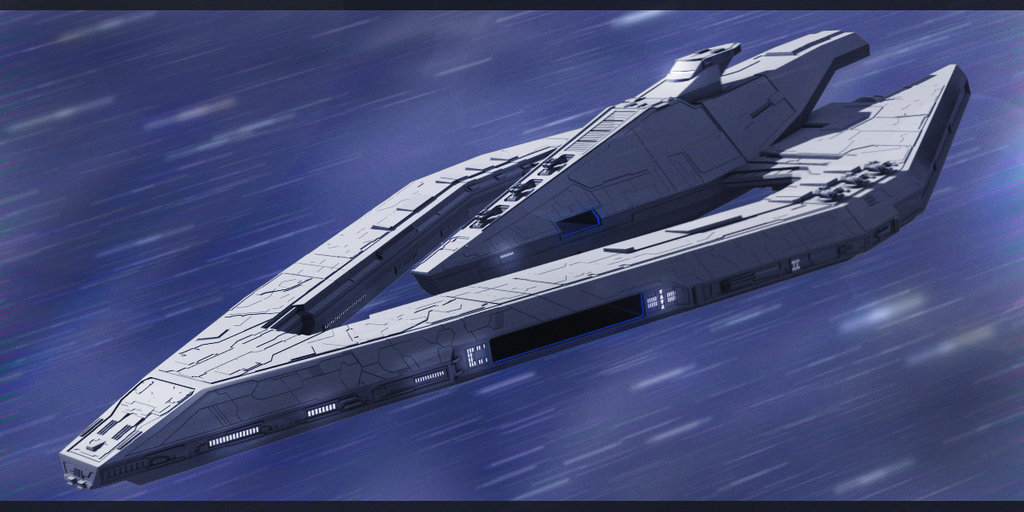
05 - Corusca-class Republic Judicial Frigate
|
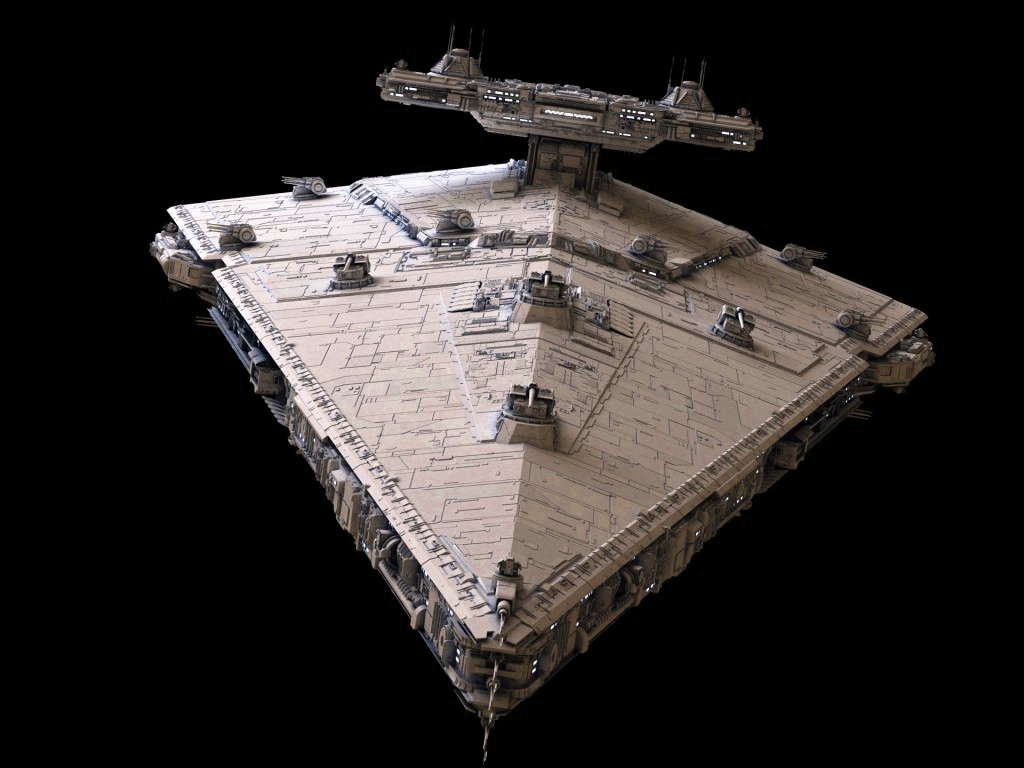
06 - Enterprise-class GalactaWerks Star Destroyer
|
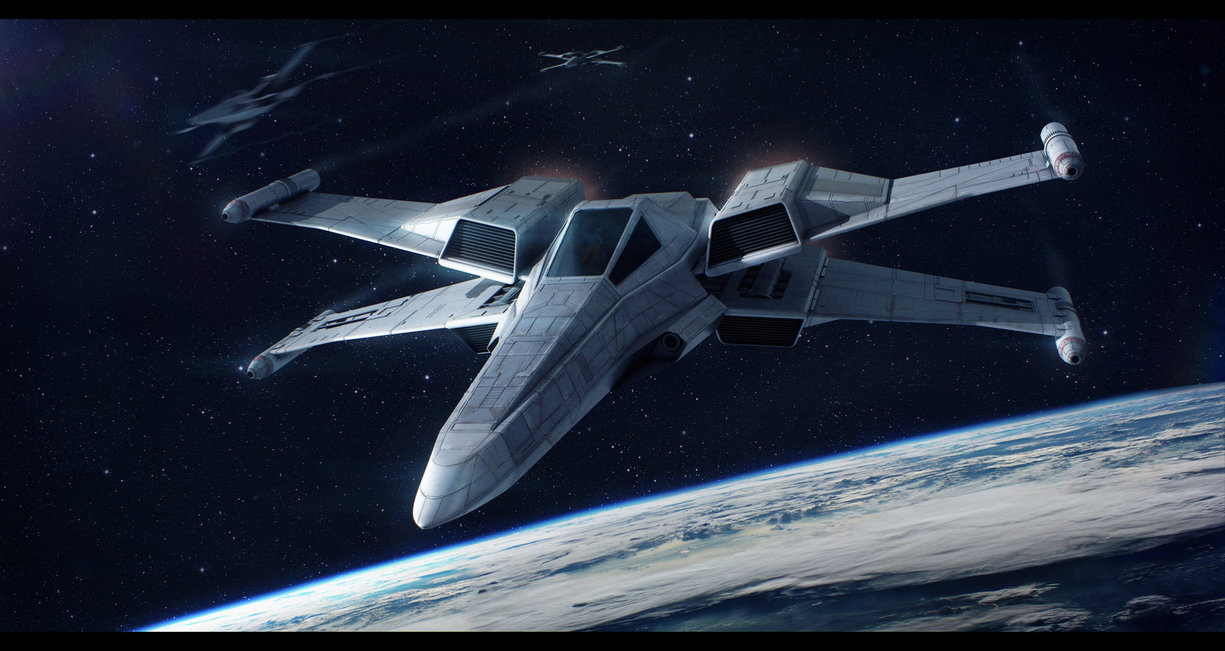
07 - VV-5-series "Xesh-Wing" Starfighter
|
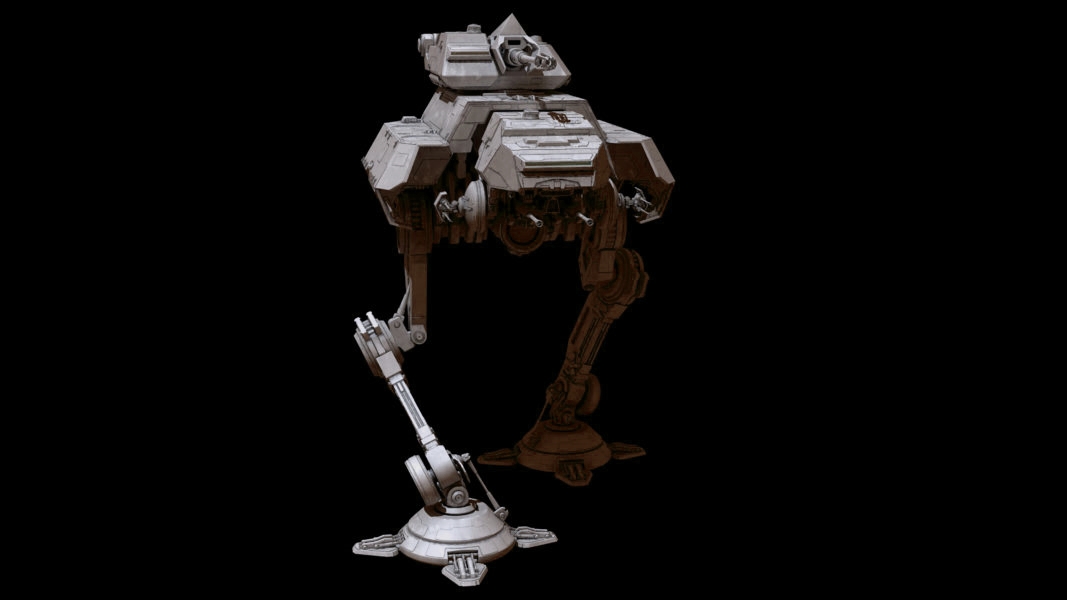
08 - GW-MDW: GalactaWerks Martial Defence Walker "Madaws/Mads"
|
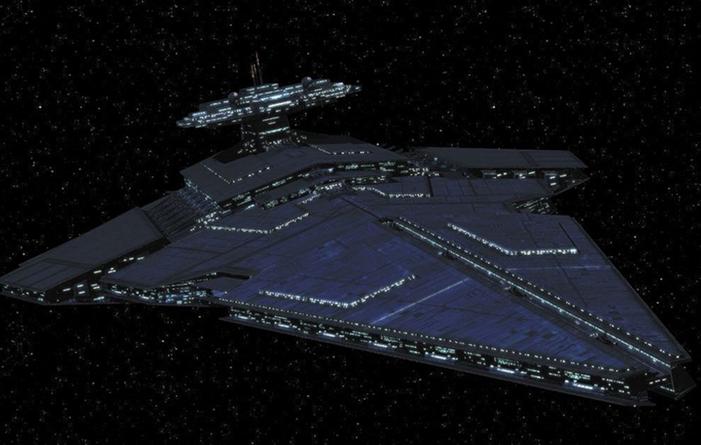
09 - Centax-class "Star Defender"
|
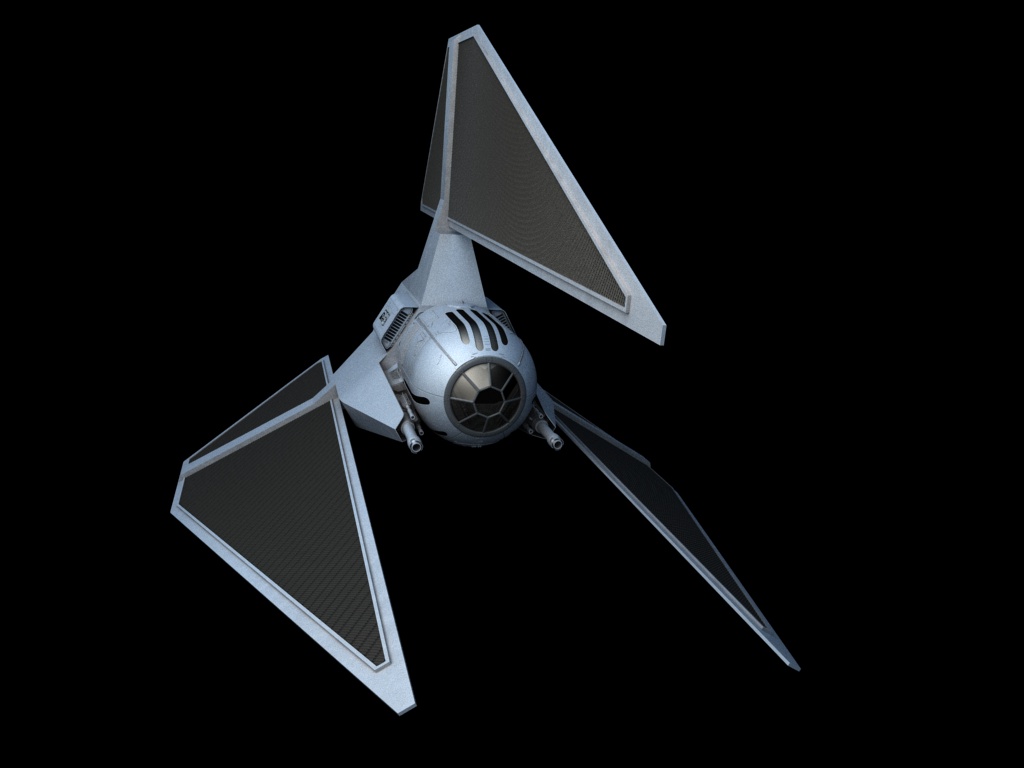
10 - TIE/TRI-series "TRI Fighter"
|
6.1 Civilian continuity
Civilian starships expose the setting's long technological memory most clearly. The YX-series remains desirable despite the end of its production run centuries ago because it is durable, extensively understood, and exceptionally customisable. Modern Corellian successors such as the YA, YB, YCC, and YC3 refine comfort, reliability, navigation, range, and modular interiors without abandoning the principle that a working ship should be adaptable by its owner.
This produces a galaxy in which age does not translate neatly into weakness. A well-maintained old freighter may be superior to a cheap new one in the hands of an experienced crew. Conversely, its reliability may depend upon layers of unofficial modification, salvaged parts, and knowledge that cannot be replaced through a catalogue order.
6.2 Fighters and deliberate limitations
Starfighters continue to embody sharp trade-offs. The Xesh-Wing combines the cultural power of the ancient X-Wing with modern systems, yet it remains a product of political symbolism as well as engineering. The inexpensive GalactaWerks Osk-Wing sacrifices protection and peak performance for simplicity and mass production. Alliance fighters vary between cheap local defence craft, autonomous hyperspace-capable attackers, and highly specialised interceptors. Bastion's TRI fighter possesses basic shielding but remains dependent upon carriers and lacks a hyperdrive, preserving the operational logic of the TIE lineage.
There should therefore be no universal list of equipment that every modern fighter automatically carries. A hyperdrive, shield generator, life support system, heavy payload, long endurance, and extreme agility all consume space, power, cost, and maintenance capacity. Factional doctrine determines which compromises are accepted.
6.3 Frigates, corvettes, and the normal scale of war
Frigates and corvettes form the practical centre of New Age naval power. They can patrol, escort, carry troops, provide command functions, and participate in fleet engagements without requiring the immense industrial and personnel commitment of a Star Destroyer. The Corusca-class Judicial Frigate exemplifies a state vessel designed to be straightforward, compartmentalised, adaptable, and comparatively quick to produce. GalactaWerks Katarn and Wampa classes provide the corporate fleet with scalable line vessels, while Alliance designs favour sturdiness, independent operation, and rapid deployment.
6.4 Capital ships as strategic institutions
A New Age capital ship is not merely a large gun platform. It is a mobile command, logistical, political, and industrial institution. The Republic's ageing Centax-class Star Defenders serve as scarce command ships. GalactaWerks' Enterprise-class reflects otherwise concealed cooperation with Bastion expertise in large warship power management. Bastion's Consul and Princeps classes express the concentrated continuity of a state that preserved the Imperial shipbuilding tradition, while old Fel and Magister hulls demonstrate how renovation can keep Dark Age vessels relevant.
Large ships remain capable of catastrophic violence, but their scarcity gives that violence political meaning. A dreadnought entering a system changes negotiations before it fires. Losing one affects prestige, command capacity, and the balance of an entire theatre. Even planetary devastation requires mobilisation, positioning, and sustained control rather than a casual abundance of planet-killing vessels.
6.5 Walkers, stations, and modular mission architecture
Walkers persist because they combine terrain access, armour, elevation, intimidation, and modular internal volume. The GalactaWerks Madaw is both an occupation weapon and a visible assertion of corporate sovereignty. Bastion's AT-AW develops the same political logic into a mobile command hub for conquered worlds. Alliance industrial walkers follow the reverse path, beginning as mining, construction, recovery, or disaster-relief platforms before accepting battlefield modules.
Mobile stations and immense docks extend this principle to strategic infrastructure. Bastion's Supernova-class installations are fortresses, shipyards, and border anchors. Their ability to move or become last-resort weapons does not make them ordinary vessels; it makes them rare concentrations of state capacity.
6.6 Stealth, communications, and reconnaissance
Advanced stealth exists but remains rare, expensive, and institutionally guarded. TRIO Spectre craft conceal military systems inside civilian luxury forms. Alliance Justice-class Star Defenders trade some size and firepower for technological originality. Bastion's Spyglass corvettes combine stealth with communications performance beyond the galactic standard. None of these examples makes detection irrelevant. Their effectiveness depends upon operational secrecy, sensor conditions, emissions discipline, intelligence support, and the ignorance of an opponent.
7. The Corporate and Industrial Order
The corporations of the New Age are not interchangeable modern companies. They are custodians of broken technological traditions. Their legal structures, regional relationships, and methods of survival explain what they can build. In analytical terms, the result resembles a form of technological feudalism: expertise is held by guild councils, corporate dynasties, state arsenals, species-based institutions, protected contractors, and immense vertically integrated combines.| Institution | Survival pattern | Technological consequence |
|---|---|---|
| GalactaWerks | Dark Age merger and continuous expansion | Absorbs disciplines across droids, arms, shipping, infrastructure, and military logistics; becomes inseparable from Republic power. |
| Cybot Galactica | Fragmented, then reconstructed | Rebuilt by technicians and corporate lineages using an old framework and enduring public trust. |
| Nubia Autostar | Protective merger | Industrial Automaton and Nubian starship interests retain distinct expertise beneath a common structure. |
| Arakyd Technics | Narrow protected niche | Survives through specialist sensors, intelligence equipment, and an exclusive Republic relationship approaching nationalisation. |
| Santhe/Sienar Futures | Withdrawal into Bastion | Preserves and advances Imperial ship and fighter traditions inside a closed state relationship. |
| Wrightsguild | Guild coalition | Shares risk and profit between shipbuilders while allowing individual members to retain political and commercial identities. |
| Verpine Spaceworks | Independent specialist network | Uses meticulous technical originality and political independence to compete with GalactaWerks and support the Alliance. |
| Corellian Engineering | Durable regional tradition | Maintains market strength through modular, repairable, owner-adaptable ships rather than centralised technological control. |
7.1 Standards as political control
A corporation gains power not only by selling equipment but by defining interfaces, maintenance contracts, communications protocols, replacement parts, navigation updates, and legal permissions. Once a government depends upon one supplier's standards, changing supplier can become more expensive than tolerating political interference. GalactaWerks' influence is therefore infrastructural before it is conspiratorial.
7.2 Why competitors survive
GalactaWerks is dominant but not omnipotent. Popular consumer loyalty, species-controlled expertise, protected state contracts, distant territories, guild solidarity, and technical originality all create barriers to absorption. These exceptions are important. They prevent the technological world from becoming culturally flat and provide the Outer Rim Alliance, Bastion, planetary governments, and independent operators with genuine alternatives.
8. Factional Technological Identities
The same mature technology produces different military and civic systems because each faction inherits a different political history, industrial base, aesthetic memory, and tolerance for risk. Technological identity should be visible in procurement and doctrine, not merely in paint schemes.
8.1 Third Republic and Judicial Forces
Visual language. Pale civic hulls, clean plated surfaces, long rational geometries, and conscious reference to the Republics of legend.
Industrial logic. Affordable, adaptable state equipment procured through contractors and constrained by a comparatively small permanent Judicial establishment.
Operational consequence. Judicial formations are competent but frequently dependent upon planetary forces, corporate support, Jedi attachments, and politically divided command structures. Their equipment is designed to be understandable and reproducible rather than uniquely dominant.
Central contradiction. The Republic presents its technology as the restoration of public civilisation while increasingly relying upon privately owned infrastructure and force.
8.2 Reborn Jedi Order
Visual language. Prestige craft that combine archaic Jedi austerity with the Republic's cultivated historical symbolism.
Industrial logic. Small production runs developed jointly with favoured shipbuilders, often around the unusual reflexes and mission requirements of trained Jedi pilots.
Operational consequence. Jedi systems can perform disproportionately well but cannot substitute for mass logistics. Hyperspace-ring dependence, specialist training, and limited numbers preserve this distinction.
8.3 GalactaWerks and the Coalition
Visual language. Corporate standardisation, utilitarian modularity, droid-compatible interiors, command nodes, and forms assembled from several inherited traditions rather than one cultural lineage.
Industrial logic. Vertical integration, proprietary standards, centralised data, vast commercial logistics, and scalable production across civilian and military markets.
Operational consequence. GalactaWerks fights through mass-produced fighters, droid formations, Marines, command ships, and networked logistics. Its power increases when war remains connected to its communications and supply architecture.
Central weakness. Centralisation creates predictable dependencies. Command disruption, corrupted data, proprietary lockouts, and the loss of key industrial nodes can have effects disproportionate to the number of assets destroyed.
8.4 Outer Rim Alliance and Rift Jedi
Visual language. Regional variation, visible repair, New Dac and Verpine originality, old hulls beside new ones, and industrial designs adapted for war.
Industrial logic. Distributed production, politically committed suppliers, local ingenuity, civilian conversion, and an emphasis upon machines that can operate away from central depots.
Operational consequence. Alliance craft favour endurance, independent hyperspace capability, rugged transports, rapid extraction, modular support, and hit-and-run concentration. Small numbers are offset by the ability to disperse without becoming helpless.
Central weakness. Variation complicates ammunition, parts, training, and fleet coordination. A resilient system may still struggle to replace a rare high-end vessel or specialist crew.
8.5 Bastion Moff Empire
Visual language. Modern Imperial wedges, severe symmetry, refined TIE descendants, jagged carriers, stark military interiors, and an unbroken visual claim to Imperial statehood.
Industrial logic. State arsenals, a thousand-year military tradition, protected shipyards, and the secluded survival of Santhe/Sienar expertise. Old hulls are renovated rather than discarded when they remain strategically useful.
Operational consequence. Bastion concentrates force through disciplined capital formations, carriers, stormtrooper deployments, specialist corvettes, and powerful reconnaissance. It can sustain a coherent war machine without relying upon GalactaWerks in the same manner as the Republic.
Central weakness. Advanced hardware does not guarantee adaptive doctrine. Many commanders remain culturally attached to Star Destroyer and TIE solutions even when a different operational concept would be superior.
8.6 Civilian, guild, and planetary technology
Most inhabitants experience the New Age through infrastructure, transport, medical care, agricultural machinery, communications, construction droids, and second-hand starships rather than elite military systems. Local technology should vary according to climate, trade access, surviving industries, and political alignment. A prosperous Core World and a recovering frontier colony may both be modern while living inside radically different levels of redundancy and convenience.
| Power | Core identity | Principal strength | Principal constraint |
|---|---|---|---|
| Republic/Judicial | Civic restoration | Affordable standard platforms | Mixed command and contractor dependence |
| Reborn Jedi | Prestige specialism | Elite pilot-centred systems | Few users and external support needs |
| GalactaWerks | Corporate synthesis | Scale, networks, droids, logistics | Centralised dependencies |
| Outer Rim Alliance | Distributed resilience | Autonomy, repairability, rapid concentration | Replacement and standardisation |
| Bastion | Imperial continuity | Concentrated fleet power and specialist reconnaissance | Doctrinal conservatism |
9. Military and Intelligence Consequences
9.1 Why large planetary wars return
Recovered populations and industry allow states to raise substantial forces again, but neither personnel nor high-end equipment is inexhaustible. Planetary objectives must often be seized rather than annihilated because they contain populations, shipyards, archives, relays, mines, political institutions, or navigational positions that both sides require. This encourages sustained ground campaigns instead of resolving every conflict through bombardment.
Trench systems and fortified fronts become rational when orbital space is contested, shields protect key positions, air and repulsorlift movement is threatened, and neither side can maintain constant precision support. Modern sensors and artillery make exposed movement dangerous. Dispersal, concealment, tunnelling, counter-battery work, electronic warfare, and protected supply corridors become as important as personal armour.
9.2 Droids and organic manpower
Droids compensate for manpower limitations and allow GalactaWerks to generate mass without the political cost of equivalent organic casualties. They are well suited to attritional assaults, hazardous environments, occupation checkpoints, heavy weapons, and predictable security tasks. Organic troops remain essential where initiative, legitimacy, persuasion, irregular warfare, cultural understanding, or flexible command matters. Mixed formations are therefore more plausible than complete replacement of one by the other.
9.3 Naval warfare
Most naval campaigns are decided by the interaction of a limited number of capital ships with larger numbers of frigates, corvettes, transports, fighters, support vessels, and fixed installations. Command ships coordinate widely distributed assets. Carriers become important where fighters lack independent range. Hyperdrive-equipped fighters enable the Alliance to raid, disperse, and reassemble. Bastion prefers concentrated formations and controlled approaches. GalactaWerks favours networked mass and replaceable platforms. Judicial forces must operate across incompatible political and technical chains.
Fleet preservation matters. A commander may withdraw rather than exchange an irreplaceable shipyard-built vessel for a merely tactical victory. Repair capacity, fuel, munitions, hyperlane intelligence, and replacement crews constrain operations. Capturing a depot or relay can alter a theatre more decisively than winning a visually larger engagement.
9.4 Intelligence operations
Technological heterogeneity creates an intelligence environment dominated by access and interpretation. Agencies need engineers, slicers, navigators, corporate specialists, cultural analysts, and human sources able to explain what a system is intended to do and which hidden dependencies sustain it. Raw interception is insufficient when proprietary protocols, obsolete machinery, compartmentalised contractors, and deliberately false navigational data coexist.
- Republic services must determine whether corporate systems are supporting the state, shaping it, or withholding information from rival political blocs.
- GalactaWerks intelligence can exploit maintenance contracts, shipping manifests, product telemetry, communications relays, and access permissions that appear commercially routine.
- Bastion intelligence benefits from closed systems, long institutional memory, and specialist reconnaissance, but secrecy can isolate it from wider social understanding.
- Alliance intelligence depends upon local networks, sympathetic suppliers, captured equipment, decentralised reporting, and the ability to act before a larger opponent converts information into mass.
- Shared wartime commands remain vulnerable to incompatible classifications, political mistrust, proprietary communications, duplicated collection, and deliberate manipulation by nominal allies.
9.5 The early Third Outer Rim Conflict
At the beginning of the Third Outer Rim Conflict, Centrality-aligned Republic forces, Bastion, Coalition-aligned Republic forces, and GalactaWerks may occupy the same broad side without operating as one technological organism. Bastion brings a coherent state war machine. GalactaWerks brings industrial scale, droids, Marines, and proprietary networks. Judicials are divided between political authorities and reliant upon attachments. Their equipment can fight together before their command cultures, security rules, maintenance systems, and strategic purposes have truly merged.
This produces believable mixed formations and operational friction: Bastion armour beside Judicial infantry, GalactaWerks hover or droid units protecting company assets, planetary auxiliaries with local equipment, and Jedi or independent crews attached without a fully coherent hierarchy. Technology makes cooperation possible, but it does not create unity by itself.
10. GalactaWerks as a Technological State
GalactaWerks is more than the galaxy's largest manufacturer. It is an infrastructure, standards, logistics, intelligence, and coercive system operating through commercial form. Its growth from Dark Age mergers, including Czerka Arms and Baktoid Armour, allowed it to inherit expertise associated with weapons, droids, colonial extraction, and military supply. Its role in rebuilding the Third Republic placed those inheritances inside public civilisation.
10.1 The methods of control
Acquisition and merger. Potential competitors are absorbed where possible, allowing expertise, patents, archives, personnel, and production capacity to be consolidated without announcing a single strategic programme.
Standards and compatibility. Products become attractive because they work together. Dependence emerges when governments, companies, and households can no longer abandon those standards without prohibitive cost.
Dual-use infrastructure. Transports, probes, relays, command systems, mapping services, and construction equipment provide legitimate value while also creating data, field trials, and capabilities useful to the hidden programme.
Protected information. Proprietary systems conceal the relationship between public products and restricted research. Staff can contribute to a component without understanding the architecture into which it will eventually fit.
Political substitution. GalactaWerks Marines and droid forces become the Republic's practical standing army, transforming procurement dependence into direct political influence.
Conflict as research. The Outer Rim wars test weapons, command networks, logistics, occupation systems, sensor coverage, and social control under real conditions while expanding access to routes and worlds.
10.2 Manipulation rather than universal acceleration
GalactaWerks does not need every part of the galaxy to become maximally advanced. Uneven development is useful. Dependence is easier to create where local alternatives remain fragmented. Certain fields are funded, standardised, and connected because they contribute to long-term requirements. Others are bought, suppressed, sanctioned, or left isolated. The Company's achievement is direction: it influences which recovered disciplines meet one another, where their data flows, and who is permitted to scale them.
10.3 The public catalogue as retrospective evidence
In isolation, GalactaWerks products appear commercially and militarily plausible. Astroprobes improve navigation. Command ships coordinate droids. Cargo vessels move the galactic economy. Walkers protect installations. Cheap fighters win contracts. Medical, construction, and colonial systems aid recovery. Only after the Sistros programme is understood do these activities form a pattern of sensing, standardisation, resource movement, remote command, environmental control, and industrial concentration.
11. The Sistros Convergence
11.1 What Sistros represents
The Sistros Sphere is not a normal expression of New Age engineering. It is the exceptional convergence of technologies, resources, archives, and Force-related research that the wider galaxy possesses only in separated forms. It is simultaneously an ark, seed vault, command centre, enclosed artificial world, and cleansing weapon. Its intended civilisation survives inside an engineered environment while the surrounding galaxy is destroyed and later reseeded according to the Board's design.
This scale becomes believable because GalactaWerks has spent generations building the economic and informational conditions required for it. No ordinary state budget announces the Sphere. Its cost is distributed through a civilisation whose shipping, war, reconstruction, mapping, scientific procurement, and corporate infrastructure have been subtly aligned towards the project.
11.2 Contributing disciplines
| Discipline or resource | Function within the convergence |
|---|---|
| Deep Core charts, relays, and wartime beacons | Provide the navigational and targeting lattice required to identify, model, and reach the intended galactic effects. |
| Corporate Sector industrial base | Supplies secluded manufacturing depth, material throughput, and administrative cover for construction beyond normal public scrutiny. |
| Miniaturised World Devastator principles | Provide automated extraction, material conversion, recycling, and self-supporting industrial processes. |
| Ithorian terraforming science | Supports biosphere design, ecological preservation, seed stock, and the controlled rebuilding of habitable environments. |
| Ziost resonance and continuity matrices | Connect ancient Sith-derived principles of persistence, resonance, and systems that continue beyond ordinary failure. |
| Artusian crystals | Contribute amplification and the controlled interaction between energy systems and Force-sensitive subjects or mechanisms. |
| Kaiburr shards | Provide exceptional focusing, reach, and amplification where conventional engineering cannot bridge the final scale. |
| Cabal and Plagueis research | Contributes knowledge concerning life extension, stasis, biological continuity, selection, and the manipulation of living systems. |
| Bastion large-hull expertise | Helps solve power distribution, structural endurance, and command problems exposed by the construction of modern capital ships. |
| Malachor | Functions as a navigational blind, concealed door, and Force-scarred environment through which the final system can remain hidden. |
11.3 Why conventional fleets are insufficient
The Sphere combines strategic concealment, immense construction, internal redundancy, unique materials, and Force-related mechanisms that conventional naval doctrine was not designed to confront. A fleet can attack structures it can locate, reach, model, and meaningfully damage. Sistros compromises each assumption. Its defeat therefore requires the convergence of political exposure, navigation, sabotage, unique knowledge, and Force intervention rather than merely the assembly of a larger line of battle.11.4 The technological irony
GalactaWerks seeks to turn galactic history into an engineering problem. Population, culture, ecology, political disorder, hyperspace, and even the Force are treated as systems to be measured, selected, preserved, or removed. The project fails because the Force cannot be reduced to an obedient subsystem. The destruction of Sistros and the devastation around Malachor tear open consequences the Board did not master, helping to create the wound through which the Mnggal-Mnggal threat can return in a new form.12. Design Rules for Future SWANA Technology
The following rules provide a practical test for new technology introduced into the setting.- 1. Begin with a recognisable Star Wars technological ancestor, role, or physical principle.
- 2. Identify what has actually improved: efficiency, integration, reliability, materials, autonomy, sensors, modularity, range, or specialisation.
- 3. Preserve at least one meaningful operational trade-off.
- 4. Separate technical existence from availability, affordability, production rate, and maintainability.
- 5. Assign the technology an industrial home, supply chain, repair culture, and institutional owner.
- 6. Explain what survived the Dark Age and how the necessary knowledge was reconstructed or preserved.
- 7. Make the design express the faction's politics and doctrine, not merely its colour scheme.
- 8. Retain tactile machinery, visible structure, and practical limits even when the system is highly advanced.
- 9. Treat droid intelligence as embodied, historical, and bounded rather than universally omnipotent.
- 10. Scale fleets, armies, and infrastructure according to recovered but finite populations and industrial concentration.
- 11. Use rare materials, stealth, Force technology, and planet-scale systems sparingly enough to preserve their significance.
- 12. Give GalactaWerks technology a dual-use connection to data, standards, logistics, control, or Sistros only where that relationship improves the hidden pattern.
12.1 Five-question canon test
- • Does it look and behave as though some period of Star Wars could have produced its ancestor?
- • Does its improvement belong to the New Age rather than simply making every earlier design irrelevant?
- • Who can build, maintain, and replace it, and how many can plausibly exist?
- • What does its design reveal about the society or institution that fields it?
- • What can an opponent exploit, deny, outmanoeuvre, corrupt, or force it to sacrifice?
Sources and Visual Reference Catalogue
Primary Data Archive entries
Primary Data Archive entries
| Ref. | Catalogue identity | Design function |
|---|---|---|
| 01 | G2-series astromech droid | Compact, mobile, weathered utility design. |
| 02 | K30-Series protocol Droid | Formal shell over exposed mechanisms; tactical rather than sociable. |
| 03 | GWM-1 Series "Battle Droid" | Armoured integration of social access and lethal function. |
| 04 | Nimbus-series probe droid | Floating sensor platform with a singular optic and cable skirt. |
| 05 | Corusca-class Republic Judicial Frigate | Pale, rational, affordable civic warship. |
| 06 | Enterprise-class GalactaWerks Star Destroyer | Refined corporate and Imperial wedge synthesis. |
| 07 | VV-5-series Xesh-Wing | Modern X-Wing lineage used as Republic state symbolism. |
| 08 | GW-MDW Madaw | Industrial platform adapted into a coercive walker. |
| 09 | Centax-class Star Defender | Old Republic colour memory applied to later wedge geometry. |
| 10 | TIE/TRI-series TRI Fighter | Shielded TIE descendant retaining carrier dependence. |
Categories: Classroom