Second Outer Rim Conflict (1,189 - 1,195 ABY)
Created by Darth Serus on Mon Oct 1st, 2012 @ 3:29am
Second Outer Rim Conflict
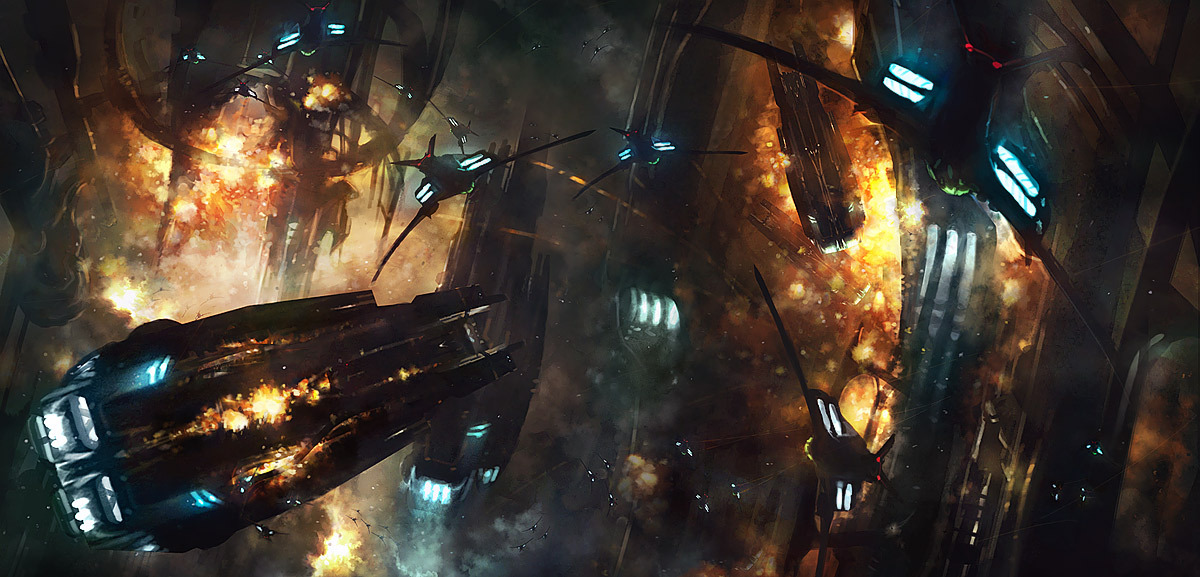
"GalactaWerks created in the Alliance what had never really existed before: a national consciousness. Whilst unforgivable to the Outer Rim citizens, what they did was not destroy a people, but make a people." – Excerpt from The Republic of Suffering (1,199 ABY), an historical account of the Second Outer Rim Conflict.
- Beginning: 1,189 ABY – Anti-GalactaWerks Riots
- End: 1,195 ABY – Belsmuth-Quelii Treaty
- Place: Trans-Hydian Region, Outer Rim Territories
OUTCOME
-
Republic military victory / Alliance moral victory
- Outer Rim Alliance disbands the majority of its armed forces
- Outer Rim Alliance retains limited autonomy as a municipal province of the Third Galactic Republic, including its own legal system and a small defensive force
- Trade re-established between the Outer Rim Alliance and the Republic
- GalactaWerks dismissed from most Outer Rim Alliance worlds
-
Ongoing internal strain within the Republic
- Legal recognition of the Rift Jedi leads to defections from the Reborn Jedi Order
- Loss of GalactaWerks trade access and increased Outer Rim costs drive inflation within the Republic
MAJOR BATTLES AND EVENTS
- Anti-GalactaWerks Riots (1,189 ABY): Union-led uprisings across Alliance worlds overwhelm GalactaWerks security, targeting Farwind Oreworks Galactica facilities. Installations are occupied or destroyed and staff taken hostage, triggering Republic military escalation.
- Serenno Negotiations (1,189 ABY): Jedi Master Thackbal leads failed peace talks with Davos Stal.
- Schism at Cathar (1,190 ABY): Jedi Knight Zam Kessar defects mid-battle, followed by sympathisers who form the Rift Jedi.
- Subjugation of Togoria (1,190 ABY): Republic victory marked by extensive civilian destruction following misinformation campaigns attributed to Damask Hul and TRIO.
- The Onderon Uprisings (1,190–1,194 ABY): Repeated revolts and occupations culminate in GalactaWerks military dominance and the detention of the ruling family at Unifar Temple.
- The Taming of Bothawui (1,189–1,195 ABY): A prolonged sub-conflict driven by Bothan resistance to Republic authority and GalactaWerks power.
- Defeat of Champala (1,191 ABY): ORA victory achieved through espionage and internal subversion by Rift Jedi elements.
- Blockade of Hapes (1,189 ABY): ORA forces constrain the Consortium, preventing intervention while maintaining trade.
- The Core Raids (1,189–1,195 ABY): Shock raids against orbital infrastructure around Core Worlds including Alsakan and Coruscant.
- The Perlemian Campaign (1,194–1,195 ABY): Final Republic offensive securing control of the Perlemian Trade Route.
- "The Kolto Wars" – Occupation of Manaan (1,193–1,196 ABY): GalactaWerks-backed occupation following Senate accusations of Selkath disloyalty.
- Defeat of Sneeve (1,191 ABY): Aerial warfare between Reborn and Rift Jedi ends in Republic occupation.
- The Battles of New Dac (1,192–1,195 ABY): Three engagements culminating in the capture of senior Republic officers by Alliance forces.
- Destruction of the Wheel (1,189 ABY): The station is destroyed by bombings; GalactaWerks involvement suspected but unproven.
- Glee Anselm Revolts (1,190–1,194 ABY): Repeated occupations end following internal collapse and surrender.
- Defence of Ruusan (1,193 ABY): Local militias repel invasion at heavy agricultural cost.
- Invasion of Belsmuth (1,195 ABY): Costly Jedi-on-Jedi conflict marks one of the war’s most traumatic episodes.
- Blockade of Alba (1,195 ABY): Final act of the war, forcing negotiations through encirclement and isolation.
NARRATIVE AND LEGACY
One of the most enduring consequences of the Second Outer Rim Conflict was the crisis of legitimacy it imposed upon the Jedi. The public schism between the Reborn Jedi Order and the newly recognised Rift Jedi shattered the assumption of a unified moral authority. By sanctioning Jedi who openly took up arms against the Republic, and later recognising the Rift Jedi as a legal institution, the Republic reframed the Jedi as political actors rather than impartial guardians.
Worlds that supported Alliance ideals without achieving formal ORA membership fared particularly poorly. Lacking treaty protections, they were subjected to prolonged Republic and GalactaWerks intervention under the guise of stabilisation. These measures, widely viewed as punitive, deepened resentment and reinforced perceptions of corporate colonialism across the Rim.
Politically, the conflict enabled the rise of Damask Hul and the Centrality bloc. Exploiting wartime fear and economic instability, Centrality advanced a platform of state authority, security expansion, and centralisation. Though presented as pragmatic governance, this shift altered the Republic’s ideological centre, normalising authoritarian language and policies.
Despite the formal end of the war, peace never truly returned. Scattered conflicts, ideological schisms, and unresolved crises persisted, from Ord Yutani’s Nea Glarist heresy to unrest on occupied worlds and flashpoints such as Onderon. None of the major factions emerged satisfied, and it was widely accepted that the Second Outer Rim Conflict had not ended the struggle, but merely delayed the next reckoning.
| COMBATANTS | Third Galactic Republic | Outer Rim Alliance |
|---|---|---|
| COMMANDERS |
Jedi Master Sotah Jedi Master Thurius Jedi Knight Loren |
Rift Jedi Commander Zam Kessar Rift Jedi Dora-Sul (abandoned post) General Davos Stal |
→ Back to the Conflicts & Wars
Categories: Conflicts and Wars