Bastion
Created by Bomoor Thort on Mon Aug 26th, 2019 @ 9:48pm
Bastion
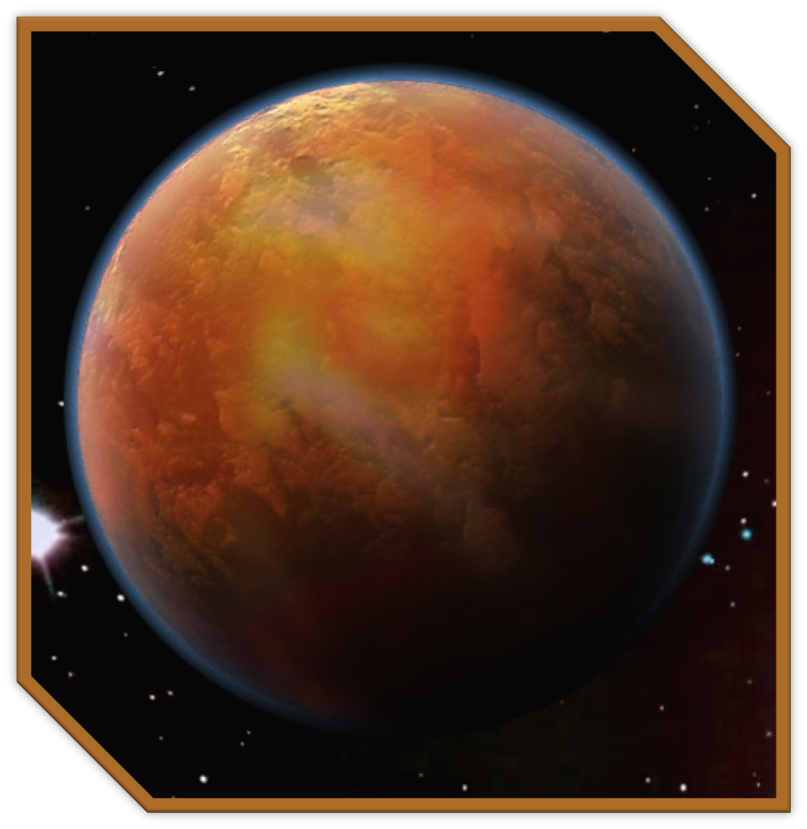
"We are the greatest hope for universal peace. We are relentless. We are the future. We are eternal!" - Valavai Tarses, from his "Proclamation of Valour" speech
Basic Information
ASTROGRAPHICAL
- Region: Outer Rim
- Sector: Braxant sector
- System: Sartinaynian system
- Suns: 1: Sarti
- Orbital position: 2
- Moons: 1: Fel
- Grid coordinates: K-3
- Rotation period: 24 standard hours
- Orbital period: 363 local days
PHYSICAL
- Class: Terrestrial
- Diameter: 12,700 km
- Atmosphere: Type 1 (breathable)
- Climate: Temperate
- Gravity: Standard
- Primary terrain: Hills
- Native flora:
- Sarti pine: A tall, narrow conifer with dark bark and tightly packed needles, commonly found across Bastion's colder hill regions and managed forests.
- Virex shrub: A low, dense shrub with waxy dark-green leaves, valued for its ability to survive poor soil, strong winds, and urban pollution.
- Fel ivy: A pale silver climbing plant often seen on older stonework and military architecture, especially around Ravelin and the Fel Citadel.
- Iron moss: A coarse grey-green moss that grows on rock, duracrete, and neglected industrial surfaces, especially near shipyards and defence districts.
- Ravelin reed: A strong, golden-hued reed cultivated in controlled wetlands and used in furniture, ceremonial fittings, and decorative civic spaces.
- Stormgrass: A hardy, short-bladed grass common across Bastion's hills and parade grounds, known for bending almost flat during storms and rising again once they pass.
- Native fauna:
- Kestral hound: A lean pack predator native to Bastion's hills and forests, known for silent coordination and disciplined hunting behaviour.
- Dravik grazer: A stocky herbivore with thick hide and short defensive horns, historically farmed in outer settlements for meat and hide.
- Carrion skree: A dark-winged scavenger bird often seen circling after storms, battles, or industrial accidents.
- Fel gull: A pale coastal bird common around Ravelin's shorelines and island districts, often nesting on cliffs, coves, and high urban structures.
- Tunneller mite: A small burrowing creature found in rocky soil, notable for creating extensive underground networks that can interfere with foundations and older infrastructure.
- Bastion wardog: A domesticated descendant of native hound species, bred for military patrols, palace security, and officer companionship.
-
Points of interest: Ravelin (capital city), Imperial Library, Fel Citadel (Imperial headquarters, including Pellaeon Memorial Gardens and the Moff Assembly Hall), Orbital Shipyards, Disra Palace (Grand Moff's official residence)
SOCIETAL
- Native species: Humans (settled)
-
Primary language(s):
- Galactic Basic Standard (Imperial dialect, referred to as "Imperial Basic")
- Government: Martial oligarchy
- Population: 2 billion
- Demonym: Imperial; Bastionite
-
Major cities:
- Ravelin
- Sartinaynian City
-
Affiliation:
- First Galactic Republic
- Confederacy of Independent Systems
- First Galactic Empire (Imperial Remnant)
- Imperial Remnant
- Second Galactic Republic (Alliance/Federation)
- Second Galactic Empire (under Fel and Krayt)
- Bastion Moff Empire (Imperial rump state)
- GalactaWerks (secretly allied; technological agreement)
OTHER INFORMATION
- Title of leader(s): Grand Moff
- Current leader(s): Valavai Tarses
- Notable natives: Symon Tarses
Description
Once known as Sartinaynian, Bastion is a closed and secretive world, known for serving as a capital of the Fel dynasty and later as the central world of the Imperial Remnant. Bastion retains many of the aristocratic and humanocentric ideals associated with Palpatine's New Order, preserved through long periods of isolation and military governance.
A fortress world steeped in conflict and intrigue, Bastion is a centre of modern military technology and a densely populated, highly structured society. Gleaming skyscrapers, maintained gardens, and managed wildlife reserves are set alongside shipyards and defence districts, with a substantial proportion of the planet administered directly by military authorities. A large civilian population persists and is predominantly Human in distribution. While non-Humans within Bastion space are not formally barred from advancement, their smaller populations and enduring cultural xenophobia among some older families and military institutions have historically limited representation in the highest levels of government and command.
Bastion maintains one of the largest standing military organisations in the known galaxy. Its technological standards rival those of the Third Galactic Republic, shaped by centuries of insular development and a strategic culture built around deterrence, readiness, and controlled projection of force.

A depiction of an avenue in central Ravelin
History
Fall of the Second Republic (300-350 ABY)
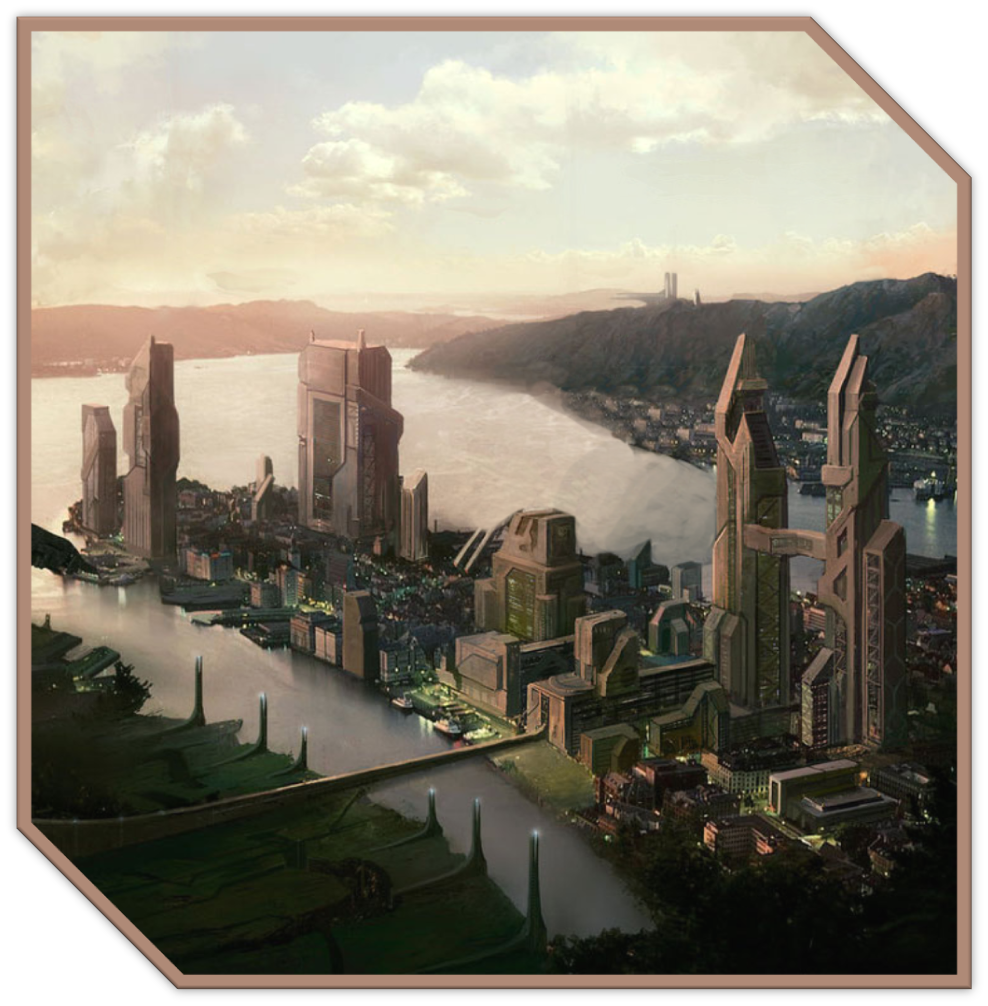
In the waning days of the Galactic Federation, a triumvirate alliance state considered the brief spiritual successor to the Second Galactic Republic after the Sith-Imperial War with Darth Krayt's Galactic Empire, the so-called Fel Empire rose to fill the power vacuum left by the demise of the Sith. Headed by surviving leaders of the New Jedi Order, the Republic, and the old Imperial establishment, the Federation sought to restore order within a fractured galaxy.
Divisions were rife between the triumvirs and their respective nations, with disparate cultures and competing priorities following years of intense warfare. The Jedi were spread thinly across a galaxy struggling to come to terms with the destruction wrought by Darth Krayt. Even where the Fel dynasty sought to stabilise the wider galactic community, many within the Federation could not draw a clear distinction between the Fel Imperials and the forces that had previously been loyal to Krayt.
These divisions and failures of cohesive planning left the Federation vulnerable to numerous smaller wars, each diminishing its authority and legitimacy. Eventually, in the third century after the Battle of Yavin, an old threat rose to challenge the Federation: the Mandalorians.
For twenty years, the New Mandalorian Crusade saw Mandalorian forces assault the tripartite state, overwhelming the disparate fleets and institutions of the combined Republic, Imperial, and Jedi partners. Dozens of planets fell to the invaders or willingly joined them as collaborators. Worlds that did not fall fought hard for their independence, while others were blockaded and cut off from essential supplies.
In the mid and latter stages of the war, it became apparent that the Federation would not endure. Dissenters within the Imperial faction pressed Empress Marasiah Fel to withdraw from the agreement and extract Imperial space from the conflict. Fel refused, insisting that the Imperials continue to defend the Federation formed after the death of Darth Krayt.
While the Imperials enjoyed the greatest conventional advantages among the allied powers, they too struggled under resurgent Mandalorian pressure. Many Imperial Knights were slain during the conflict, while others were rumoured to have abandoned their posts, either fleeing the war or aligning with Mandalorian interests. These accounts fed into later speculation concerning the origins of a new Mandalorian faction that emerged from internal schism: the Defenders.
The Defenders opposed the "True Mandalorians" waging galactic war. Led by an individual remembered as Mandalore the Divider, this grouping has at times been theorised to have been formed by Imperial Knights who adopted Mandalorian armour and doctrine, though this has never been confirmed.
Prior to the rise of the Defenders and the Mandalorian civil war that followed, isolationist powers within the Imperial establishment grew in strength until the Council of Moffs held a decisive majority. With public opinion turning against the Federation and, in particular, against Force users, the Council forced the Empress to accede to their demands and abruptly withdrew Imperial support for the wider war effort. It was during this period of rapid Imperial retrenchment that the Defenders rose to prominence.
Withdrawing to the long-standing fortress capital of Imperial space, Bastion, most Imperial forces departed from former Federation operational zones. This did not immediately prevent further conflict with Mandalorian forces, who had occupied large swathes of territory once controlled by Imperial institutions. Bastion dedicated itself to reinforcing its borders and effectively disappeared from broader galactic affairs, prioritising self-preservation and technological development. The prevailing view of the Council of Moffs was that the wider galaxy would collapse under the weight of Mandalorian barbarism. Once sufficiently rearmed, Bastion intended to return and restore order.
Throughout the New Galactic Dark Age and the eventual Grand Proclamation that marked the advent of the Third Galactic Republic, this did not occur.
Interregnum
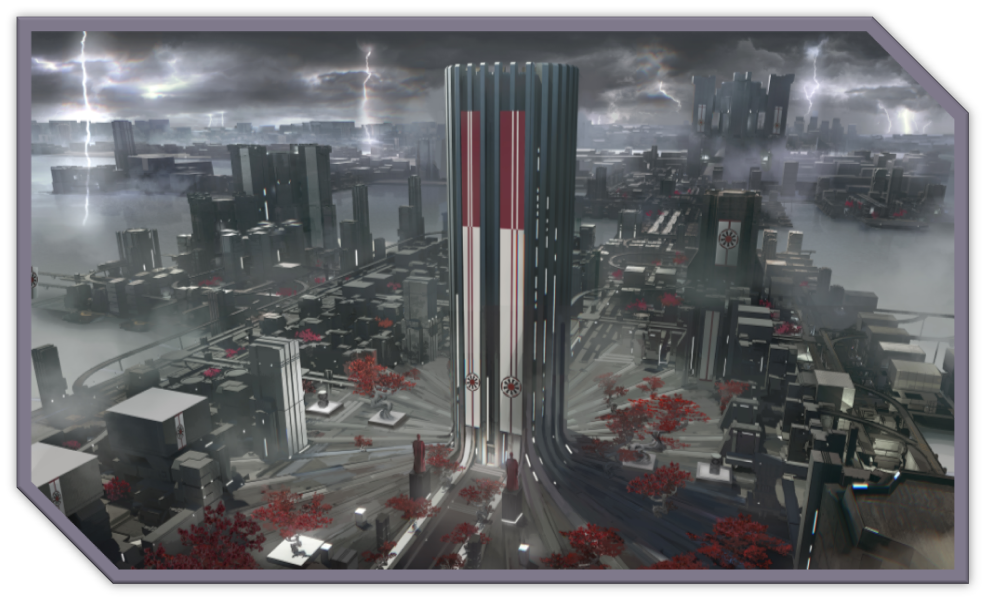
With the authority of the Fel dynasty waning, and political legitimacy concentrated in a single surviving figure, the Council of Moffs rapidly asserted control throughout the rump state of the former Galactic Empire. With borders heavily defended around the central world of Bastion, the planet's name became synonymous with the state itself, with authority running centrally from the fortress world.
With the passing of the ceremonial Empress, no clear successor emerged. This outcome was widely understood to align with the Council's long-term intentions. While many within the political and military establishment harboured ambitions toward the vacant throne, the High Moff of the Council executed prominent pretenders, ending overt claims and establishing an interregnum that would persist into the modern era. The High Moff reinstituted the title of Grand Moff as a new head of state, elected from within the Council itself.
Over time, the state relinquished formal claim to the title of Galactic Empire, accepting diminished scope while retaining Imperial doctrine in day-to-day governance. The polity became known as the Bastion Moff Empire, and variably as the Moffist Empire or simply Bastion. The throne itself became known as the "Empty Throne", held in reverence within elite society and reserved, in some traditions, for a prophesied successor to Palpatine of Naboo.
The Early Bastion Wars
There have been five formalised "Bastion Wars" between Bastion and the successor Mandalorian state formed by the victorious Mandalorian Defenders, Manda'toma. Situated close to the isolationist Bastion state, the two hegemonies have contested territory and ideology numerous times. For many in Bastion, these wars represent long-standing grievances against Mandalorians for their actions in centuries past, and the enmity between them is often treated as a blood feud. Bastion does not generally distinguish between Manda'toma and the Mandalorian Exiles, who themselves have repeatedly raided Bastion-held regions.
The prolonged hostility between Bastion and Mandalorian space has driven rapid advances in military technology and naval doctrine. Bastion continues to field one of the most capable and sizeable standing forces in the galaxy, even where most conflicts remain contained within its own borders or along Mandalorian frontiers.
Despite overtures from the Third Galactic Republic to establish diplomatic ties, the Council of Moffs has rebuffed most efforts at engagement. Bastion maintains strict border controls and sustains a public narrative that the outside galaxy is uncivilised and unstable, a belief actively encouraged within Imperial civic culture.
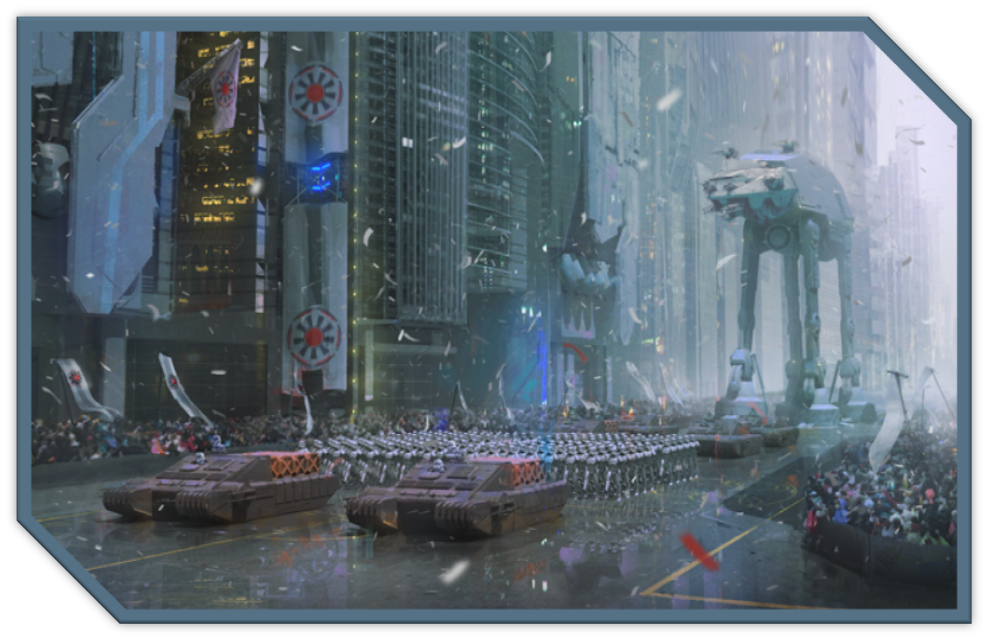
By the early 1,000s ABY, Bastion had long since ceased any pretense of engagement with the wider galactic community. The Bastion Moff Empire existed as a closed, highly militarised rump state, its borders rigidly enforced and its internal culture shaped by centuries of siege mentality. The Third Galactic Republic was viewed with suspicion and contempt, regarded as weak, corrupt, and dangerously compromised by corporate influence and Force-wielding institutions.
Bastion’s most significant modern engagement with external powers occurred during the Fifth Bastion War, fought against the Mandalorian state of Manda’toma. The conflict, which spilled across multiple systems and culminated in the Invasion of Bescane, reinforced Bastion’s long-held belief that Mandalorian power represented an existential threat. Although the war ended in a negotiated ceasefire rather than decisive victory, its outcome deepened mutual animosity and further entrenched Bastion’s policy of isolation and military preparedness.
In the aftermath of the war, Bastion accelerated internal development programs, investing heavily in fleet modernisation, weapons research, and planetary defences. This period saw a renewed emphasis on technological self-sufficiency and strategic deterrence, with Bastion’s military capabilities reaching parity with, and in some areas exceeding, those of the Third Republic. Officially, these developments were framed as defensive necessities. Unofficially, they reinforced Bastion’s self-image as the last disciplined and orderly successor to the old Imperial ideal.
Despite its public rejection of outside influence, it is widely believed that Bastion has maintained discreet technological and industrial arrangements with select off-world entities, including limited cooperation with GalactaWerks. These relationships are tightly controlled and denied by the Council of Moffs, but are tolerated where they serve Bastion’s strategic interests. As of the present era, Bastion remains politically isolated, militarily formidable, and ideologically convinced that the wider galaxy will eventually prove its need for Imperial order once more.
Current Events (1,218 ABY)
By 1,218 ABY, Bastion found itself at the centre of a crisis that threatened to upend centuries of isolationist policy. Persistent rumours of beskar deposits within Bastion-controlled space, alongside allegations of covert Imperial entanglements with GalactaWerks, drew the attention of multiple outside actors. Acting on these rumours, the crew of the Red Raptor entered Bastion space during a period of acute internal tension, at a time when the authority of Grand Moff Valavai Tarses was already under strain.
A faction of Moffs, led by Moff Anthark, rose in open defiance of Tarses. This faction advocated a return to absolute isolation and the consolidation of Bastion’s power through a clandestine alliance with Executive Morthart of GalactaWerks. Central to this arrangement was the secret exploitation of beskar-rich regions within Bastion space. Workers were exported and mining operations conducted at scale, with beskar funnelled to GalactaWerks in vast quantities, all without the knowledge of the Third Galactic Republic. In contrast, Tarses, whose political influence had waned in recent years, sought to sever these arrangements and re-emerge cautiously onto the galactic stage. His resolve was driven in part by a prophecy delivered by his son, foretelling the return of the Sith to claim the Empty Throne and restore Bastion to true Imperial prominence.
During these events, Thane of Caanus revealed himself to Bastion’s leadership as Lord Serus. Alongside Bomoor Thort, Lady Amare, and the Red Raptor crew, Serus aligned with Tarses to expose the full scope of Anthark and Morthart’s activities. Evidence of illegal beskar extraction, GalactaWerks manipulation of Mandalorian actors, and extensive corporate interference in Outer Rim conflicts was brought to light. The confrontation escalated rapidly into what became known as the Bastion Civil War. The conflict was brief but decisive, lasting only days, and culminated in the Battle of the Masserix Belt. There, the Star Destroyers of Anthark and Morthart were destroyed through direct intervention by Serus, Bomoor, and Amare, employing overwhelming Force power to end the insurrection.
In the aftermath, Tarses’ authority as Grand Moff became undisputed. Serus and Amare were formally revealed as the new Sith and recognised as the prophesied figures destined to guide Bastion’s future, cementing a secret compact between the Imperials and the Sith. As part of this accord, Tarses entrusted the Red Raptor crew with a vast intelligence cache that became known as the Bastion Document. This archive detailed GalactaWerks’ covert dealings, its role in destabilising the Outer Rim Alliance, its manipulation of Mandalorian factions, and a network of corporate corruption spanning decades and centuries. The document was provided with the explicit intent that it be shared, setting in motion a chain of events that would reverberate far beyond Bastion’s borders.
→ Back to Planets
Categories: Planets